
On this page
- 🦴 What is the anterior cruciate ligament, and why does a tear lead to surgery?
- ⏳ What happens if you do not have the operation?
- 🏋️ Preparing before surgery
- 🏥 The day before and the day of surgery
- ⚕️ How is the operation performed?
- 🗓️ After surgery at a glance
- 🎯 Returning to daily life — answers to your 20 questions
- ✅ Summary and next step
- 📚 Scientific sources
ACL Reconstruction: The Pre-Operative Guide
What to know before ACL surgery: what the ligament does, what happens to the meniscus and cartilage if you do not operate, how to prepare, what takes place in the operating room, and answers to 20 questions about returning to daily life and sport.
23 min read
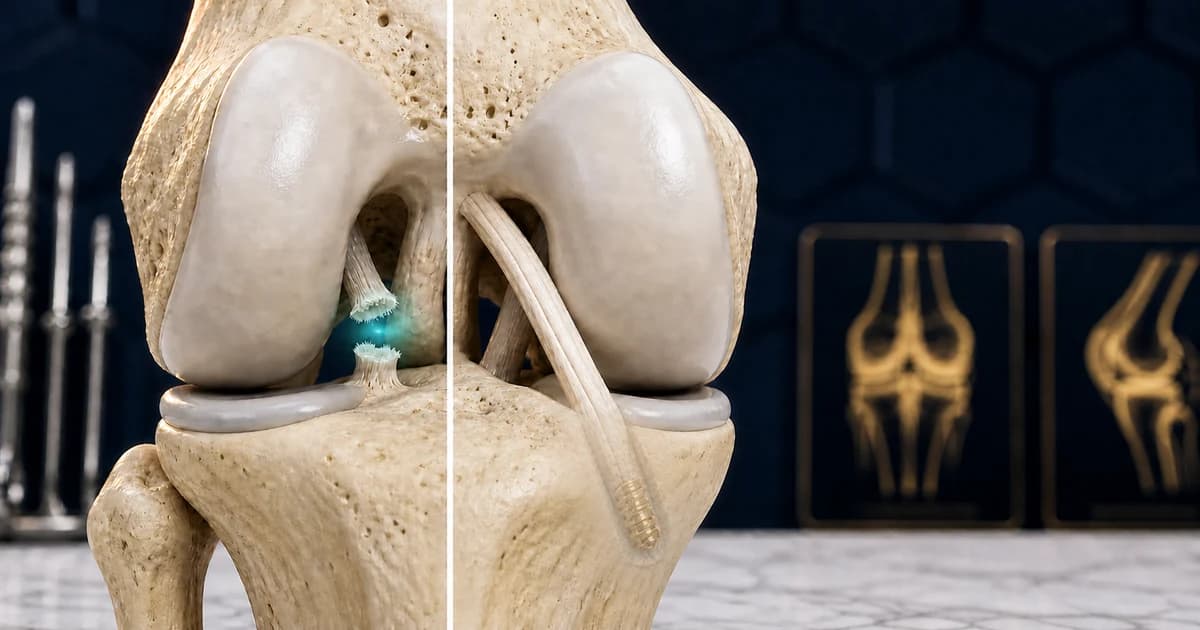
Your knee twisted on a pivot or a landing, something gave, it swelled, and now you feel it slip on stairs or when you change direction. Imaging has shown a torn anterior cruciate ligament — and perhaps a torn meniscus beside it. This guide explains what the ligament does, what happens if it is not reconstructed, how to prepare, what takes place in the operating room, and when you return to daily life and sport. What you are reading is the common scenario for a primary reconstruction; the final decision is made after examination, and your treating team's written instructions always take precedence.
🦴 What is the anterior cruciate ligament, and why does a tear lead to surgery?
Two thick ligaments cross in the centre of the knee. The front one is the anterior cruciate ligament: a strong cord between the femur and the tibia that stops the tibia from sliding forward and controls the knee's rotation. You barely miss it when walking in a straight line, but on a pivot or a landing the knee gives way.
Most tears happen without contact: the foot is planted, the body turns and the knee twists. Many patients remember a pop, the knee swells within the first hours — usually bleeding inside the joint — and once the inflammation settles the main complaint changes from pain to instability.
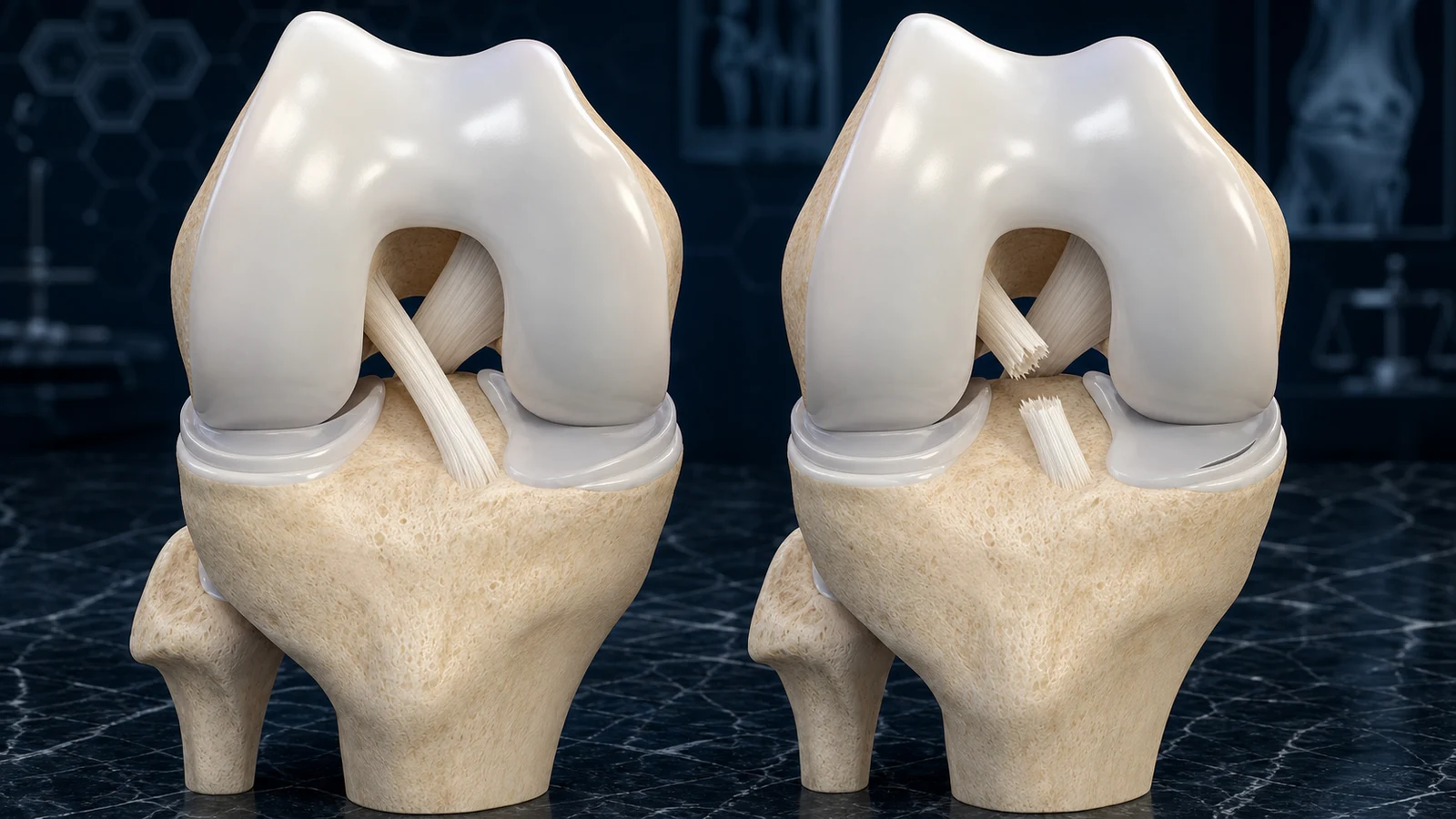
One point changes the whole decision: in a substantial share of these tears the meniscus is injured in the same moment. The menisci are two crescent-shaped cartilages between the femur and the tibia that spread load and cushion the joint like a washer, and a tear shows itself as joint-line pain, catching or locking, and recurring swelling. So the fate of the meniscus is part of the same decision.
A complete mid-substance tear of this ligament does not heal on its own, but surgery is not compulsory for everyone. In a well-known randomised trial, early reconstruction was compared with a strategy of rehabilitation plus delayed reconstruction if needed, and outcomes at 2 and 5 years did not differ meaningfully; about 40 per cent of the non-surgical group were eventually operated on. Surgery becomes a serious option when instability persists despite proper rehabilitation, when the patient is young and active and returning to pivoting sport, or when there is a concomitant injury such as a repairable meniscal tear.
⏳ What happens if you do not have the operation?
The most honest point first: this operation is not an emergency, and you have several weeks to decide and prepare. Someone who does not play pivoting sport, who rebuilds strength and control with serious rehabilitation and who does not feel the knee give way in daily life, can live well without surgery. The criterion is genuine instability in your life, not one sentence in an MRI report.
But if the instability continues, endless delay has a cost, and that cost lands on the meniscus and the cartilage:
- Every episode of giving way is a fresh injury. The 2022 clinical practice guideline of the American Academy of Orthopaedic Surgeons states that when surgery is indicated for an acute isolated tear, earlier reconstruction is preferred, because the risk of additional meniscal and cartilage injury starts to rise within the first 3 months.
- A repairable meniscus may stop being repairable. A peripheral tear that today closes with a few sutures extends with repeated giving way until the only remaining option is to remove the torn part.
- Removing meniscal tissue is not free. In long-term reviews, roughly half of knees after partial meniscectomy develop radiographic signs of osteoarthritis within a few years, and compared with repair the risk of cartilage damage is higher.
The fair summary: this tear is not in itself an order to operate immediately, but a knee that keeps giving way is losing its own meniscus and cartilage. Make the decision with your surgeon, based on your activity level, the state of the meniscus and your response to rehabilitation.
🏋️ Preparing before surgery
The practical goal is simple: walk into the operating room with a quiet knee — swelling settled, full extension available, and the quadriceps switching on. This is not optimistic advice: in systematic reviews, 4 to 16 weeks of exercise before surgery raised quadriceps strength, and in trials quadriceps strength and the single-leg hop test at three months after surgery were better. The certainty of this evidence is low to moderate, but its direction is clear.
General preparation
- Stop smoking; for tissue healing and fewer wound complications it is the cheapest thing you can do.
- Have your blood sugar, blood pressure and anaemia managed with your physician.
- The skin of the knee and shin must be healthy; show any wound, infected spot or fungal infection to your surgeon.
- Obtain crutches — and a brace if one is prescribed — in advance, and arrange a companion for the overnight stay.
Preparation exercises
Your physiotherapist will tailor the programme for these two exercises.
Quadriceps set
You tighten the muscle at the front of the thigh without moving the knee. This is the engine of your rehabilitation after surgery, and the symmetry of its strength is one of the criteria for returning to sport. Stop immediately if: sharp knee pain, new swelling or a painful thigh cramp.
More detailLess detail
Starting position: lie on your back with the leg straight; place a thin towel under the ankle.
How to do it:
- Tighten the muscle at the front of the thigh so the back of the knee presses towards the mattress.
- Hold for a few seconds and feel the kneecap ride up, then release slowly. The knee does not move at all during the exercise, and do not hold your breath.
Stop immediately if: sharp knee pain, new swelling or a painful thigh cramp.
Heel prop
You rest the heel on a support so the weight of the leg carries the knee towards full extension. This range is harder to regain after surgery than flexion is. Stop immediately if: sharp pain, tingling in the shin, or more swelling after the exercise.
More detailLess detail
Starting position: on your back on a mat; only the heel rests on a pillow, with the back of the knee unsupported.
How to do it:
- Relax the leg and let the weight of the shin carry the knee towards straight; stay there for a few minutes.
- Finish with a few quadriceps contractions so active extension is trained as well.
Stop immediately if: sharp pain, tingling in the shin, or more swelling after the exercise.
🏥 The day before and the day of surgery
The day before
- Fasting: exactly as your anaesthesia team instructs; take the starting time from them, not from other people's experience.
- Medicines: bring a complete list of the medicines, supplements and herbal products you take. Daily medicines — especially blood thinners and diabetes medicines — must be coordinated in advance with your surgeon and anaesthesia team; never stop or add anything on your own.
- Bathing: shower as the hospital instructs, and do not shave the operative area at home with a razor; small nicks are entry points for infection.
- Bring with you: identity and insurance documents, the MRI and X-ray reports and discs, recent laboratory tests, your medicine list, crutches and brace, loose trousers, closed non-slip shoes, and overnight personal items.
The day of surgery
The sequence is similar in most centres: admission and changing into the operating gown, vital signs and an intravenous line, meeting the anaesthetist and signing the consent form, and the surgeon marking the correct leg. That marking is a standard safety step; if it does not happen, remind them. The surgeon usually goes over the decisions that may be made during the operation once more — the meniscus in particular. You are then taken to the operating room, and your companion waits in the waiting area until the result is announced.
⚕️ How is the operation performed?
Anaesthesia
This operation is performed under both spinal and general anaesthesia, and the choice belongs to the anaesthetist. Under spinal anaesthesia you are awake but the lower body is numb, and you usually receive a sedative as well. A nerve block is often added for pain in the first hours.
What happens in the operating room
This is not open knee surgery: the main work is done arthroscopically through two or three small openings, and only harvesting the graft needs a small incision. The torn ligament is not stitched back together; for a mid-substance tear there is strong evidence that reconstruction gives a better result than repair. So a new ligament is built from your own tissue and implanted. Three grafts are common and all three give good results; the choice is individual:
- Hamstring tendon: harvested through a small incision on the inner upper shin, leaving the front of the knee untouched; kneeling pain is less.
- Patellar tendon with two bone blocks (BPTB): bone-to-bone healing is solid; in exchange, pain at the front of the knee is its most common complaint.
- Quadriceps tendon: increasingly used, with donor-site problems reported to be fewer than with the patellar tendon.
An allograft (donated tissue) also exists, but clinical guidance prefers the patient's own tissue in young, active patients.
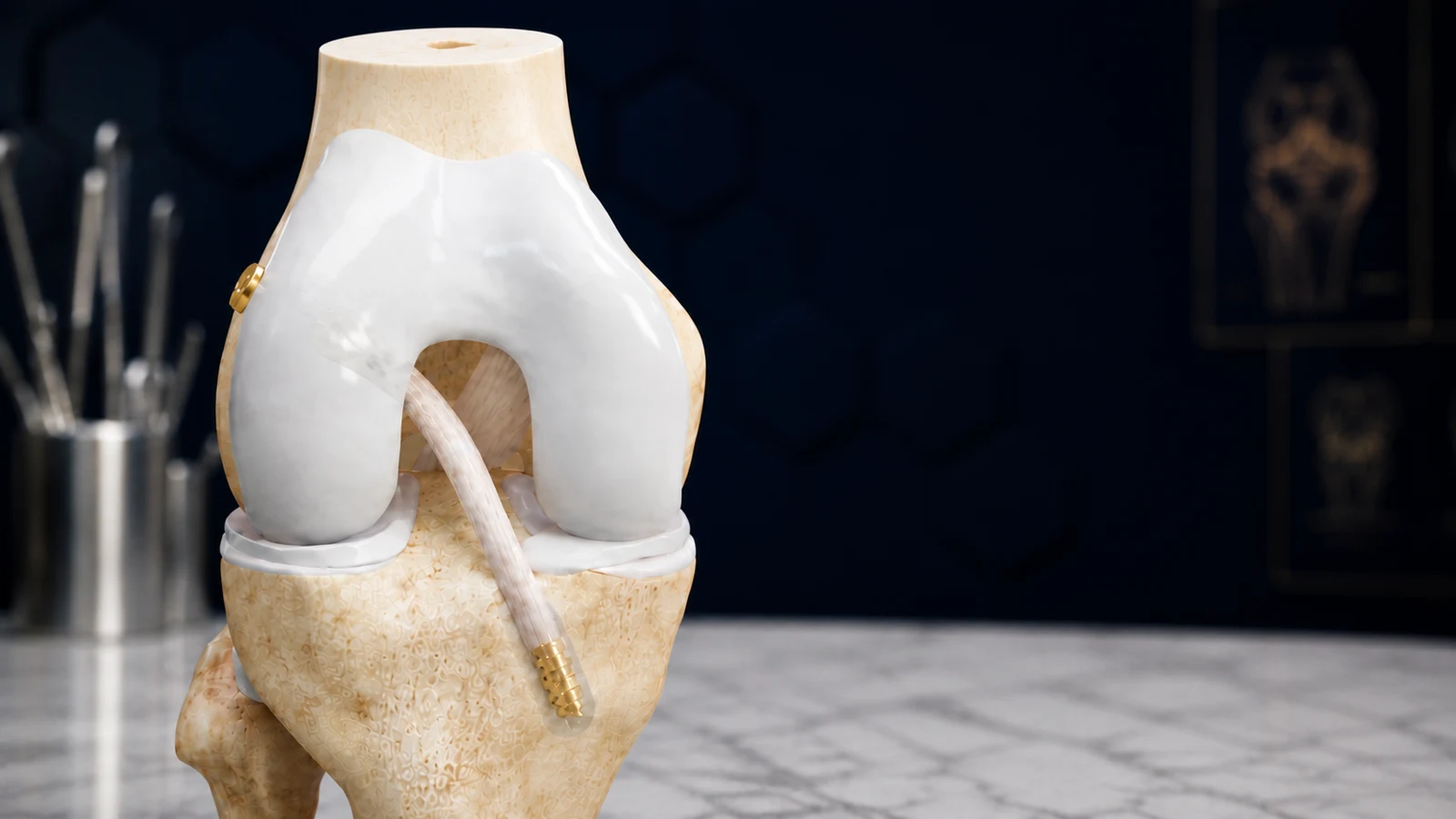
The surgeon then drills tunnels in the femur and the tibia exactly at the original ligament's attachment sites, passes the graft through them and secures both ends with a screw or a dedicated button. The whole operation usually takes about 1 to 2 hours. Here is the point that explains the calendar of the coming months: the graft is strong on day one, but the body needs months to give it a blood supply and turn it into a living ligament. The rehabilitation programme comes from that biology, not from how much pain you feel.
The meniscus in the same session
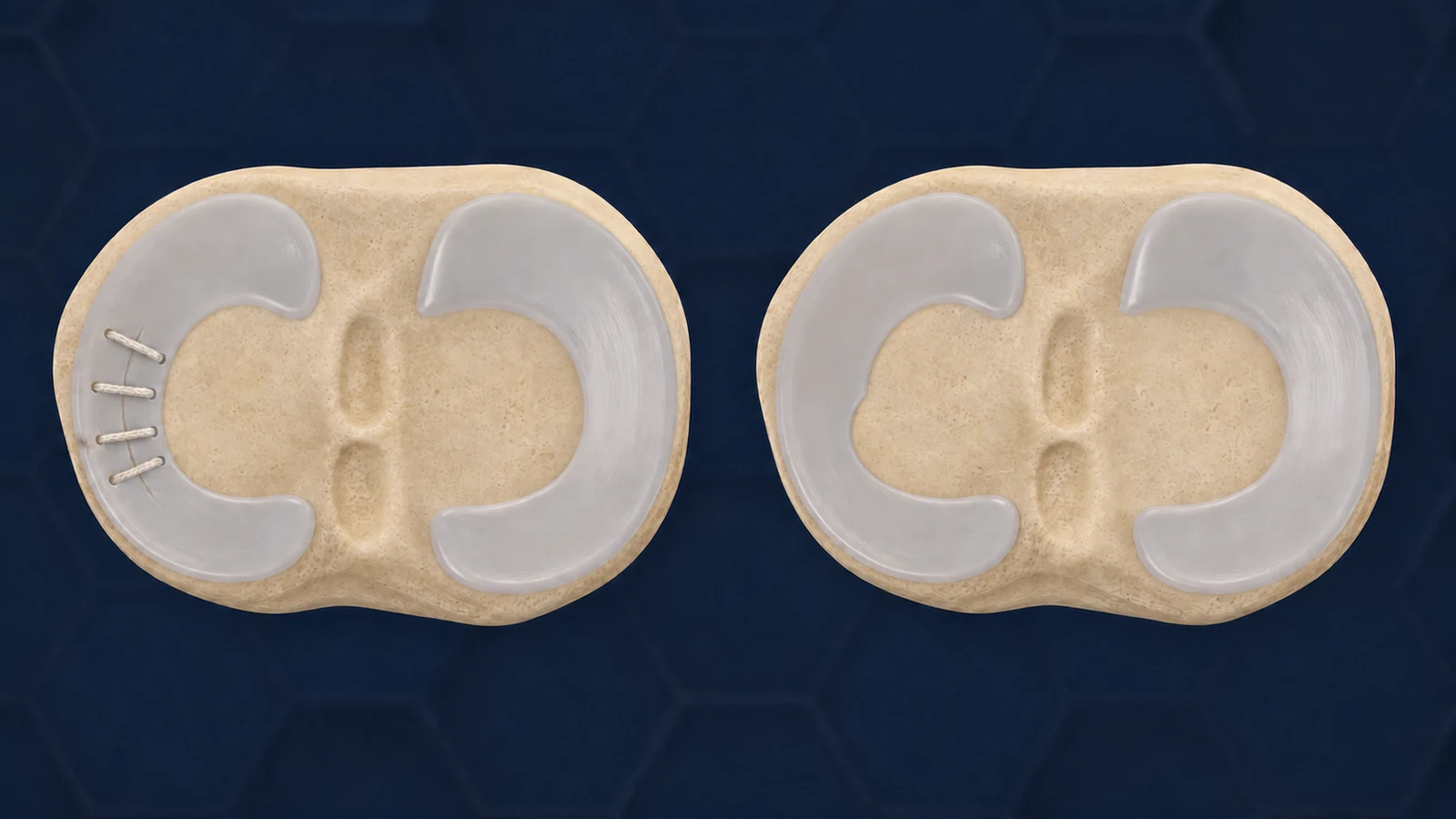
If the meniscus is also torn, the decision is made on seeing the tear during the operation, and there are two routes. A tear in the well-vascularised peripheral zone that can be repaired — especially in younger patients and athletes — is closed with a few sutures, because keeping the meniscus protects the cartilage in the long term. If the tissue cannot heal or the tear pattern is not repairable — more common at older ages — only the damaged part is removed and the healthy rim is preserved. Repair gives the better long-term result, but the price is stricter early weeks: limits on weight bearing and on bending the knee.
Lateral augmentation for pivoting athletes
For athletes returning to pivoting sport, one further step is usually added: lateral extra-articular tenodesis. Through a small incision on the outer side of the knee, a strip of the iliotibial band is taken and fixed to the femur so rotation is better controlled. In a large randomised trial of athletes under 25 with a hamstring graft, this technique brought two-year graft failure from 41 per cent down to 25 per cent; "failure" in that study was broadly defined and also included residual rotational instability.
🗓️ After surgery at a glance
You usually stay one night in hospital and get out of bed with crutches the same day or the following morning. After an isolated, uncomplicated reconstruction, weight bearing begins as tolerated with crutches; if the meniscus has been repaired, many protocols limit weight bearing for about 4 to 6 weeks and restrict knee flexion — often to around 90 degrees — with a brace. Which route applies to you is written on your discharge sheet.
The broad lines of the first weeks: pain control with the discharge prescription, ice and elevation for swelling, daily exercises for full knee extension and for waking the quadriceps, and suture removal usually two to three weeks after surgery. Physiotherapy starts in the first days.
The map of the following months: crutches are set aside within the first weeks, light running usually comes at around 3 to 4 months and only after strength criteria are met, and pivoting sport no earlier than 9 months and again on the basis of testing, not the calendar.
The full details of wound care, the stage-by-stage exercise programme, warning signs and safe return to activity are in a separate guide: the complete guide to care and rehabilitation after ACL reconstruction.
🎯 Returning to daily life — answers to your 20 questions
These are the questions patients usually ask before deciding on surgery. The times are common ranges, not rules; your team's specific instructions, and whether the meniscus was repaired, always take precedence.
1) How much pain will I have, and for how long?
The first days are the most painful part of the journey and are controlled with the discharge prescription, ice and elevation; a nerve block, if one was given, makes the first hours easier. The slope of improvement is usually noticeable from the second week, but swelling and discomfort after heavy activity can last for months. Pain that does not settle at all with the prescribed painkillers is not normal and should be reported.
2) How many nights will I stay in hospital?
One night in the usual routine. The exact length depends on pain control, the anaesthetic wearing off, your ability to walk with crutches and your general condition. Discharge happens once you can move with crutches and know your medication, brace and exercise plan.
3) When can I put weight on the operated leg?
After an isolated, uncomplicated reconstruction you usually bear weight as tolerated with crutches from the first day. If the meniscus was repaired, the discharge sheet usually restricts weight bearing for about 4 to 6 weeks so the meniscal sutures have a chance to heal. Whatever number is written on your own discharge sheet takes precedence over this text.
4) How long will I need the brace and crutches?
Crutches usually stay with you for the first few weeks, and the criterion for putting them away is not a date: you must walk without a limp, with the knee straight as the heel lands, and without more swelling. A brace is prescribed according to your surgeon and whether the meniscus was repaired, and it may be locked or limited in the first weeks. Abandoning crutches too early turns a limp into a habit.
5) When are the stitches removed?
Usually two to three weeks after surgery, at the same visit where the wound is checked. If absorbable subcuticular sutures were used there is nothing to remove and the wound is simply inspected. Until then, follow the dressing and shower instructions on your discharge sheet.
6) When does physiotherapy start and how long does it last?
From the first days, aimed at full knee extension, swelling control and waking the quadriceps. The structured programme usually runs for several months, and most of it is the exercises you do yourself at home every day. Progress is measured by criteria — range of motion, strength and walking quality — not by the number of sessions.
7) When can I drive?
In studies measuring brake reaction time, after right-knee surgery it returned to the level of healthy individuals around 4 to 6 weeks after the operation, and for the left knee in an automatic car much sooner. The conditions matter more than the date: opioid painkillers finished, the brace not interfering with pedal control, and being able to perform an emergency stop without hesitation.
8) When can I go back to desk work?
Seated work is often possible in the first weeks, part-time or from home. The practical conditions are pain controlled without opioids and being able to elevate the leg and get up every hour. Sitting still for long stretches increases swelling and is not good for circulation.
9) What about standing or heavy work?
These come back later and step by step, because prolonged standing, climbing ladders, lifting and working on uneven ground all demand strength and knee control. The time to return to your level of work varies with the job and with your rehabilitation progress, and must be coordinated with your surgeon and physiotherapist. If the meniscus was repaired, this return is more conservative.
10) How should I manage stairs?
The simple rule: going up, the healthy leg first; coming down, the operated leg and the crutch first. Keep one hand on the rail at all times. In the first weeks take the steps one at a time and without rushing; coming down stairs quickly is one of the situations that demands the most control from a freshly operated knee.
11) How should I sleep?
Lying on your back with the operated leg straight is a safe position. Do not put a pillow under the knee itself, because sleeping for hours with a bent knee delays full extension; if the leg needs elevating, put the pillow under the shin and heel. If you have a brace, read on your discharge sheet whether it is to be worn at night.
12) When can I shower?
This depends on your dressing and must be read from your discharge sheet: often sooner with an intact waterproof dressing, and a few days later with an ordinary one. Until the wound has fully closed, baths, swimming pools and public baths are off limits. A shower chair and a non-slip mat genuinely reduce the risk of falling while on crutches.
13) How should I pray?
In the first weeks, praying seated on a chair, or standing with prostration onto a raised turbah, is an accepted solution that puts no load on the knee. Kneeling and repeatedly rising from the floor are exactly the movements that place the knee in deep flexion under load, and after a meniscal repair they must be postponed for longer. Returning to the usual form should be gradual and approved by your team.
14) When is sexual activity possible?
Usually after a few weeks, once pain is controlled and the wound has closed, choosing positions that put no weight, twist or deep bend on the operated knee. If the meniscus was repaired, the same flexion and rotation limits that apply to other activities apply here too. Raising this question with your team is entirely routine.
15) When can I travel or fly?
Short trips with regular stops to walk become possible sooner. For flights, especially long ones, coordinate with your surgeon before buying a ticket; prolonged immobility raises the risk of clots and you may have specific advice. During the journey move your ankle regularly and get up every hour or two.
16) When can I start light exercise such as cycling and swimming?
A stationary bike without resistance is usually one of the first activities added once the necessary range of motion is reached, and swimming after the wound has fully closed and with your surgeon's permission. Front-crawl kicking is usually allowed earlier than breaststroke, because the breaststroke kick rotates the knee. Your physiotherapist sets the exact starting point for each.
17) When can I start running?
In most programmes light running in a straight line is raised at around 3 to 4 months after surgery, but the date alone is not the permission: the knee must be free of swelling, fully straight, and the quadriceps strength must have reached an acceptable ratio of the healthy side. Starting to run too early usually causes swelling and sets the programme back rather than moving it forward.
18) When can I go back to football or other pivoting sports?
Today's criterion is a combination of time and testing. In a well-known study of athletes, each month of delay in returning up to the ninth month reduced the risk of reinjury by about 51 per cent, with no further reduction after the ninth month; and among those who passed the return-to-sport tests almost nobody was reinjured, while about a third of those who failed were. So: not before 9 months, and not without passing the tests.
19) What changes if the meniscus is repaired as well?
The ligament operation itself does not change, but the early weeks become stricter: limited weight bearing and knee flexion capped at a set limit — often around 90 degrees — for about 4 to 6 weeks, and a longer avoidance of squatting and twisting. These restrictions are the short-term price of a long-term gain: a preserved meniscus takes load off the cartilage. If part of the meniscus was removed instead of repaired, the early restrictions are usually fewer.
20) What is the chance of tearing it again, and how long does the result last?
Across the literature, about 81 per cent of patients return to some sport, 65 per cent to their pre-injury level and 55 per cent to competitive level. The risk of a second injury is high in young athletes returning to high-risk sport: in one meta-analysis about 23 per cent sustained a second cruciate injury, in the same knee or the opposite one. That number is the reason return-to-sport criteria and prevention training are taken seriously — not a reason to fear the operation.
✅ Summary and next step
ACL reconstruction is not compulsory for every tear; it becomes necessary for a knee that keeps giving way despite proper rehabilitation, or for someone returning to pivoting sport. Once the decision is made, two things matter most: entering surgery with a quiet knee and an active quadriceps, and returning to sport on the basis of testing rather than the calendar. The state of the meniscus is part of the same decision, and the sooner it is assessed, the better the chance of keeping it.
To learn more about this area of care, see the knee arthroscopy page.
To have your own knee assessed, contact Dr. Jalil Emad's office or book an appointment online.
۰۹۱۳۷۸۲۵۲۰۷ Book an appointmentRelated guides: Post-operative care and rehabilitation: ACL Reconstruction Surgery: Postoperative Care and Rehabilitation · Service page: Knee Arthroscopy
This content is provided for general education only and does not replace examination and the opinion of your treating physician. The final decision about whether and how to operate is made after examination, review of imaging and consideration of each patient's specific circumstances. Change medicines and pre-operative preparation only in coordination with your surgical and anaesthesia team.
📚 Scientific sources
View the scientific sources
- AAOS Clinical Practice Guideline Summary: Management of Anterior Cruciate Ligament Injuries. J Am Acad Orthop Surg 2023;31(11):531–537 — aaos.org
- Frobell RB, et al. Treatment for acute anterior cruciate ligament tear: five year outcome of randomised trial. BMJ 2013;346:f232 — doi.org
- Grindem H, et al. Simple decision rules can reduce reinjury risk by 84% after ACL reconstruction. Br J Sports Med 2016;50(13):804–808 — doi.org
- Carter HM, et al. Effectiveness of preoperative exercise programmes on quadriceps strength prior to and following ACL reconstruction: a systematic review. Phys Ther Sport 2020;41:83–92 — pubmed.ncbi.nlm.nih.gov
- Alshewaier S, et al. The effectiveness of pre-operative exercise physiotherapy rehabilitation on outcomes after ACL reconstruction: a systematic review. Clin Rehabil 2017;31(1):34–44 — pubmed.ncbi.nlm.nih.gov
- Getgood AMJ, et al. Lateral Extra-articular Tenodesis Reduces Failure of Hamstring Tendon Autograft ACL Reconstruction: 2-Year Outcomes From the STABILITY Randomized Clinical Trial. Am J Sports Med 2020;48(2):285–297 — doi.org
- Ardern CL, et al. Fifty-five per cent return to competitive sport following ACL reconstruction surgery: an updated systematic review and meta-analysis. Br J Sports Med 2014;48(21):1543–1552 — doi.org
- Wiggins AJ, et al. Risk of Secondary Injury in Younger Athletes After ACL Reconstruction: A Systematic Review and Meta-analysis. Am J Sports Med 2016;44(7):1861–1876 — doi.org
- Salata MJ, et al. A systematic review of clinical outcomes in patients undergoing meniscectomy. Am J Sports Med 2010;38(9):1907–1916 — pubmed.ncbi.nlm.nih.gov
- Xu C, Zhao J. A meta-analysis comparing meniscal repair with meniscectomy in the treatment of meniscal tears. Knee Surg Sports Traumatol Arthrosc 2015;23(1):164–170 — doi.org
- Nagelli CV, et al. Return to Driving After ACL Reconstruction: A Systematic Review. Orthop J Sports Med 2021;9(1) — doi.org
- Xie X, et al. A meta-analysis of bone–patellar tendon–bone autograft versus four-strand hamstring tendon autograft for ACL reconstruction. Knee 2015;22(2):100–110 — pubmed.ncbi.nlm.nih.gov

Dr. Jalil Emad
Orthopedic specialist and surgeon, board-certified in bone and joint surgery; years of experience in knee and hip replacement, sports injuries and arthroscopy in Isfahan.
Related articles
Total Knee Replacement Surgery: Postoperative Care and Rehabilitation
Read knee replacement recovery step by step, from wound care and medicines to exercise. Progress depends on pain, swelling and movement.
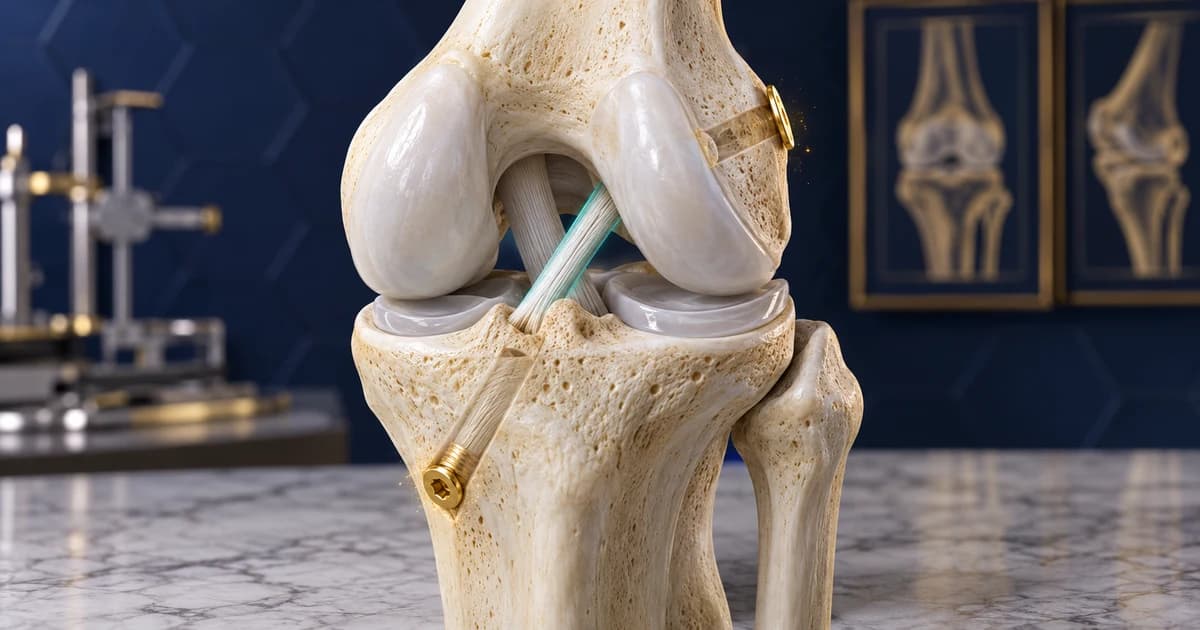
ACL reconstruction
Care and rehabilitation after ACL reconstruction; if your meniscus was repaired in the same operation, pick your version at the top of the article — the type of repair sets the weight-bearing and knee-bend limits of the first weeks.

Total Knee Replacement: The Pre-Operative Guide
What to know before knee replacement: what knee osteoarthritis is, what happens if you do not operate, how to prepare, what takes place in the operating room, and answers to 20 questions about returning to daily life.