🏥 What happens on the day of surgery?
Carpal tunnel release is usually performed under local anaesthesia as a day procedure. You can go home once your general condition and pain control have been checked. Have someone take you home.
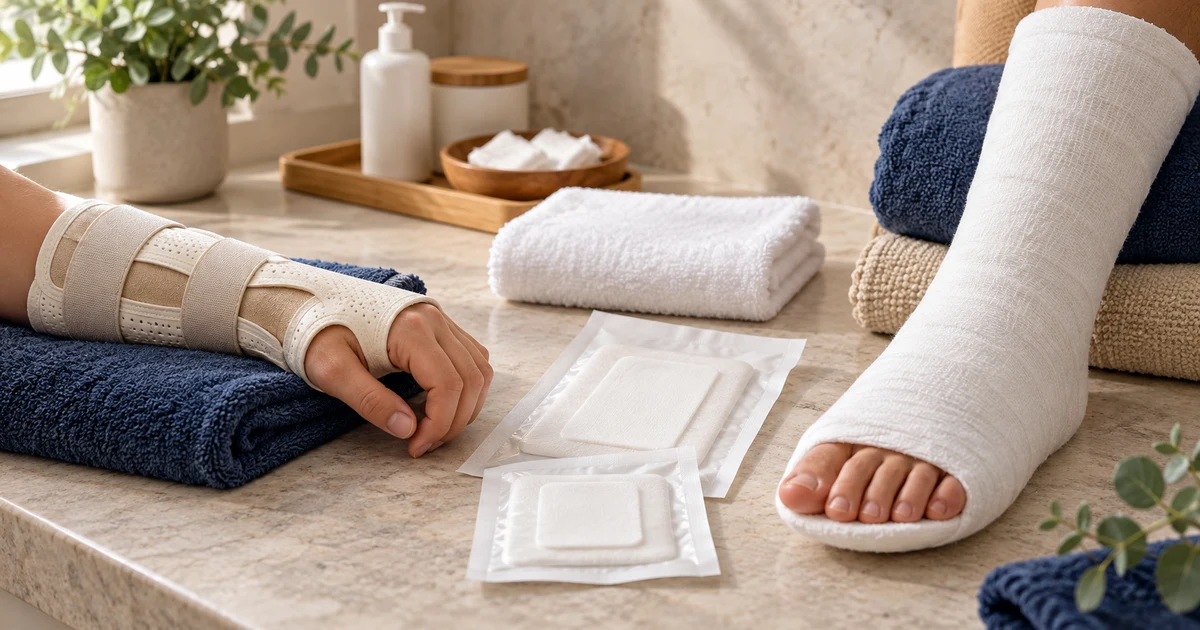
Your hand is covered with a bulky dressing. Before leaving, collect your prescription, wound-care instructions and follow-up appointment time. Protect the hand from heat, pressure and knocks until the anaesthetic wears off.
Pain at the operation site, some swelling and tenderness in the palm are expected early on. Tingling may improve sooner than hand strength returns; recovery is not the same for everyone.
⚠️ Warning signs: when should you act immediately?
Contact your surgeon or treatment centre the same day: spreading redness or warmth; pus or foul-smelling discharge; the wound opening; fever as defined in your discharge instructions, or chills; increasing pain; new numbness or weakness; a wet or loose dressing that you cannot safely change; uncomfortable pressure under the dressing or splint; a fall or blow to the operated limb.
Seek emergency help: cold, pale or blue fingers; very severe pain or progressive weakness in the limb; shortness of breath, chest pain or fainting. In Iran, call emergency medical services on 115.
If you have questions about your hand wound, persistent numbness or returning to work, call Dr Jalil Emad’s clinic on 0913 782 5207, or book an appointment online. In an emergency, do not wait for the clinic to reply; follow the instructions in the emergency box above.
1Care in the first days after surgery
Keep the wound clean and dry, elevate the hand when resting and move the fingers gently. If your individual discharge instructions differ, follow them.
🩹 Wound, dressing and stitches
It is normal to feel anxious about the first dressing change. In the clinic’s plan, the bulky dressing stays on for 48 to 72 hours and is then replaced with a light dressing. Your care team removes the stitches 2 to 3 weeks after surgery.
More detailLess detail
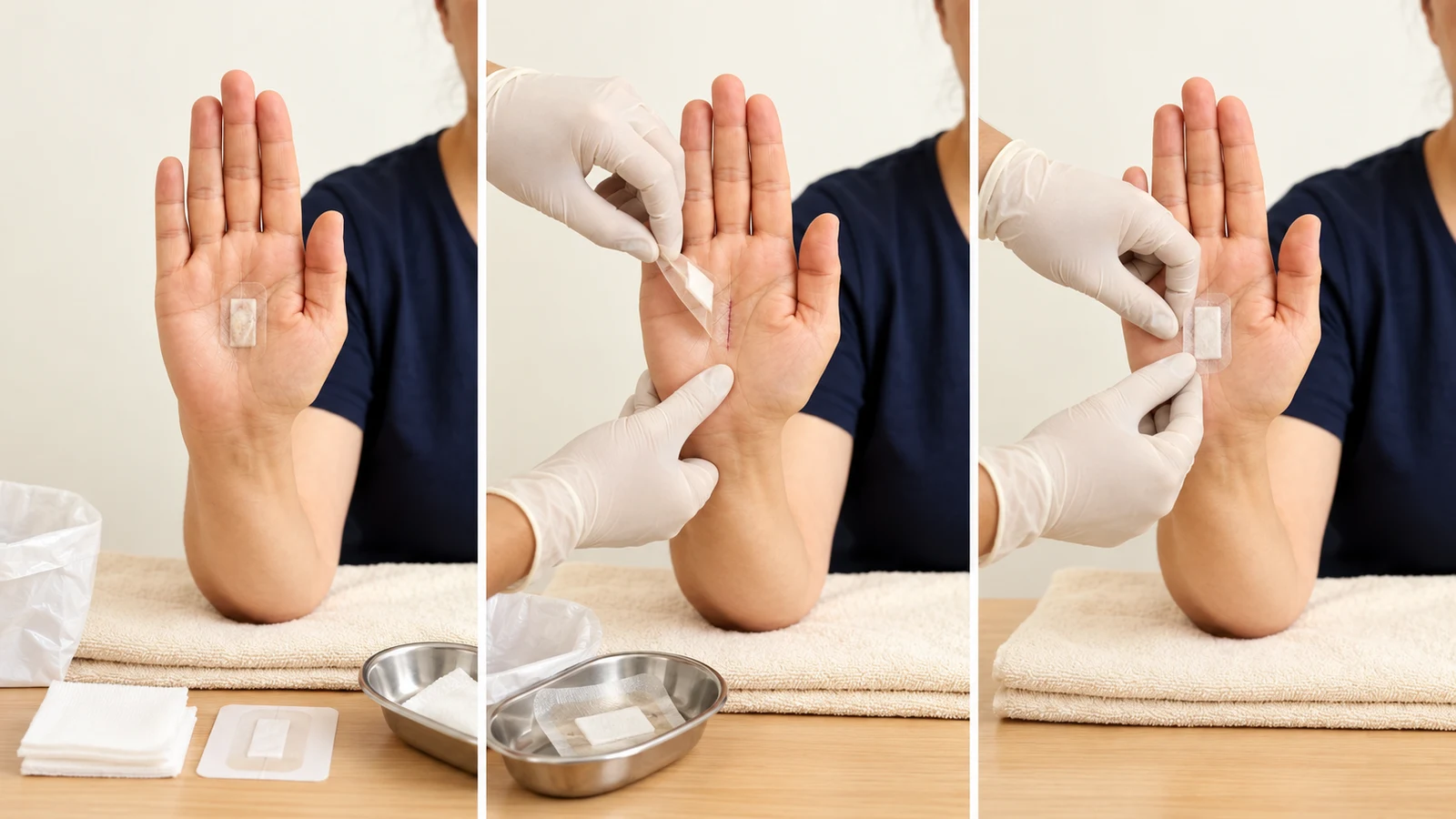
- If you are alone, change the dressing only by the method your care team has shown you for your operated hand. If you have not been shown how, or cannot do it safely, call the team for help before removing the dressing. The steps below are for a helper who has been shown how to change your dressing. The helper first washes their own hands and sets a clean dressing, gauze, a pair of sterile gloves in their packaging and a waste bag on a clean surface.
- Remove the outer covering gently. If it is stuck to the wound, do not pull it off; ask your care team for guidance.
- After removing the old dressing, the helper washes their own hands again and puts sterile gloves on both of their own hands. Keep the wound on your hand dry. When it is time to apply the new dressing in the steps below, the helper must avoid touching its inner surface. Once all the steps are finished, the helper removes the gloves and washes their own hands.
- Look at the wound without pressing it; do not pick at the stitches or scab. Clean it only as you were taught, and do not apply an ointment or solution of your own choice.
- Apply a dry, light dressing that covers the wound line without pressing on the fingers. The fingers should stay warm and their normal colour.
- Change a wet, dirty or loose dressing as you were taught. Contact the treatment centre if you cannot do this safely. A small, diminishing stain is different from increasing discharge.
🦾 Movement and light use of the hand
A splint is not routinely needed. Gently move your fingers within a comfortable range without a routine splint.
More detailLess detail
- Gently bend and straighten your fingers as far as the dressing allows. If they do not bend all the way, do not push them into a fist. Use your other hand for gentle help only if your surgeon or hand therapist has shown you how.
- Use the hand for light tasks you can tolerate. Do not start firm gripping, lifting loads or supporting your body weight through the palm too early.
- Gently move your shoulder and elbow as well, so they do not become stiff while you protect the hand.
🚿 Showering and keeping the wound dry
Follow the showering time given in your discharge instructions. The waterproof cover must keep water away from the dressing.
More detailLess detail
- Use an intact waterproof cover before showering, and check afterwards that the dressing is dry.
- Do not direct a strong stream of water onto the hand. A cover with water leaking underneath it is not reliable.
- If the dressing gets wet, change it as you were taught and ask your care team for help if needed.
💊 Medicines and pain control and PRP
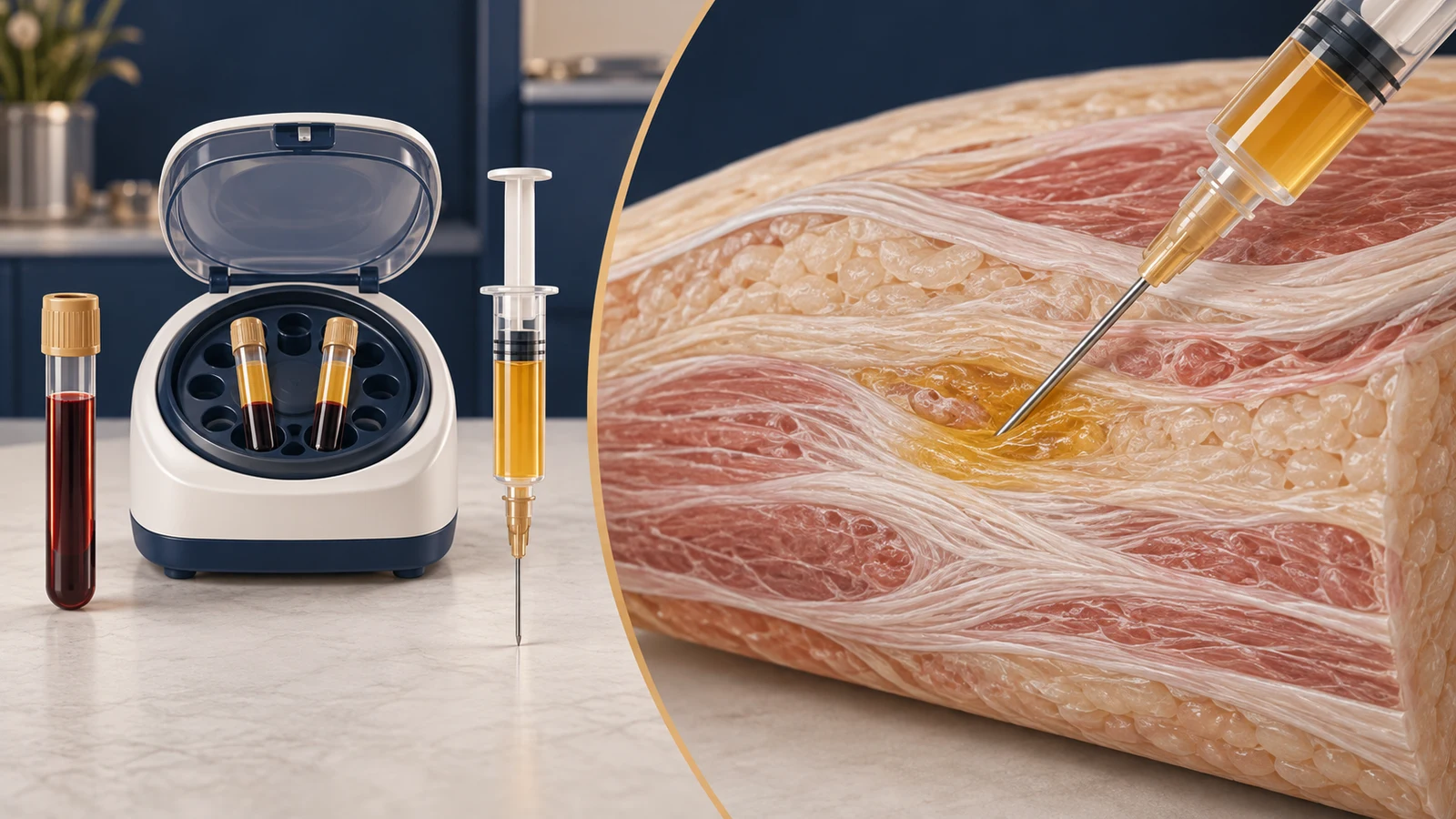
Take your prescribed medicines as directed. The dose and intervals are not the same for everyone. Platelet-rich plasma (PRP) is prepared from a small sample of your own blood. Platelets contain growth factors; the aim is to support natural tissue healing.
More detailLess detail
- If a painkiller is prescribed as needed, follow that instruction rather than adding a new fixed schedule.
- Ask your doctor or pharmacist before adding an over-the-counter medicine, so you do not take the same active ingredient twice.
- Do not drive if a medicine makes you drowsy. Follow that medicine’s instructions for a missed dose; do not take two doses together.
- After carpal-tunnel release, Dr Emad may consider PRP as an adjunct in selected cases. In one trial, PRP used during surgery was associated with greater improvement in the feeling of numbness in the early months; however, overall symptoms and function were not better than with surgery alone, and this result does not establish a postoperative injection programme. If an injection is considered for you, your care team selects and performs it; continue usual hand care.
🧊 Swelling and elevating the hand
In the first days, rest your hand on pillows above heart level.
More detailLess detail
- Support your forearm so the hand does not hang down at your side for long periods.
- Do not put rings back on until the swelling subsides. Jewellery must not press on a finger or the wrist.
- If cold treatment is part of your plan, use a layer of fabric and keep the dressing dry. Do not put ice on numb skin or directly on the wound.
🎯 Short rehabilitation and a gradual return
Gentle finger movement and light use of the hand are the basis of rehabilitation. Routine occupational therapy or physiotherapy is not needed for everyone. If movement or hand function does not recover well, your surgeon will assess whether a referral is needed.
- Until the bulky dressing is removed: move the fingers within the limits of the dressing and avoid pressure on the palm.
- After the dressing is made lighter: gently increase movement without sharp pain.
- After the stitches are removed and the wound is fully closed: begin gentle scar massage only as taught by your care team.
Finger tendon gliding
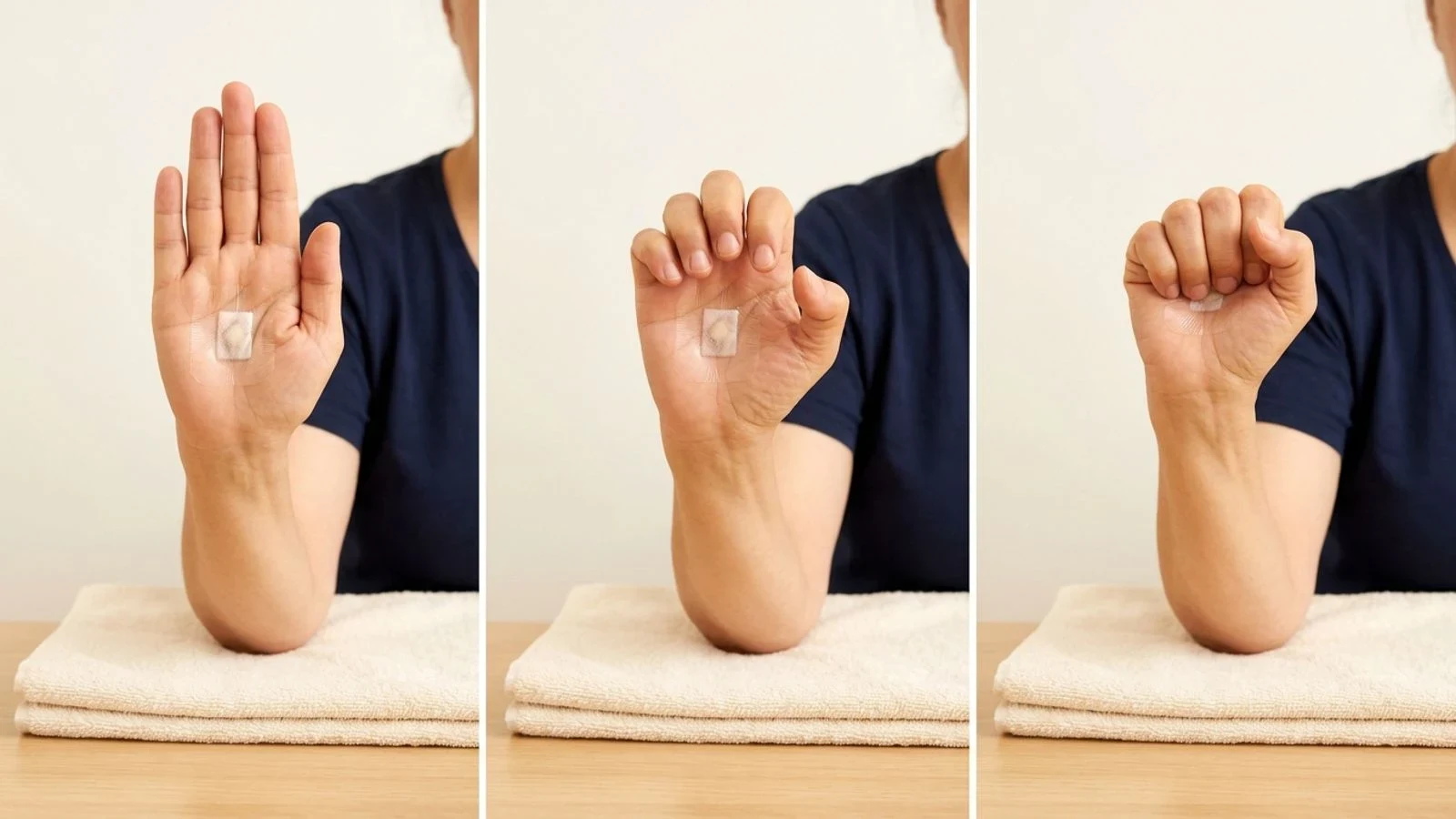
Gently straighten your fingers, form a hook, straighten them again and then make a loose fist. Practise in a few short sessions each day, within comfort. Stop and contact your care team for sharp pain, new numbness or the wound opening.
More detailLess detail
Before you start: This movement helps maintain finger movement. After the dressing is made lighter, and when pain allows, sit on a chair with your forearm on a table. No equipment is needed; keep the wrist straight.
How to do it:
- Gently straighten the fingers of your operated hand, keeping the wrist in line with the forearm.
- Bend the middle and end finger joints to form a hook; do not press on the palm.
- Straighten the fingers again, then make a loose fist and open it without squeezing.
Movement tips: Only the fingers move; the wrist stays straight. Move slowly and breathe normally, with a brief rest between sessions. A mild stretch is acceptable, but the movement should not cause sharp pain.
Amount, repetitions and progression: Practise in a few short sessions each day, within comfort. As the movement becomes easier, gradually increase the range. Reduce the amount of exercise if pain or swelling increases afterwards.
Stop immediately if: Stop and contact your care team for sharp pain, new numbness or the wound opening.
Common mistakes: In this exercise, move the fingers under their own power. Keep the wrist straight, make a loose fist and avoid pushing the fingers into the palm with your other hand.
Easier version: Use a smaller, comfortable range; do not close the fist fully.
🚗 Returning to work, driving and everyday activities
Your return to activity depends on the work involved, pain, wound condition and hand strength. Improved tingling alone does not mean you are ready for heavy work.
- Work: Start with light tasks and rest between sessions. Heavy or repetitive manual work needs more time; arrange your return with your surgeon.
- Driving: Start after the wound has healed and the dressing has been removed, when you can confidently control the steering wheel and gears without sedating medicine, and sudden reactions do not cause limiting pain.
- Prayer: While leaning on the palm is painful, do not put weight through the operated hand. Use a more comfortable position or support.
- Sex: Choose a position that does not put body weight through the operated palm or cause pain or pressure on the wound.
- Sport: Walking without pressure on the hand is usually easier. Start swimming, weights and activities such as push-ups only after the wound has healed and loading the hand is allowed.
❓ Frequently asked questions
1) Why are my fingers still numb?
Relieving pressure on the nerve does not mean sensation returns immediately. After severe or longstanding nerve damage, sensation and strength take time to recover and may not recover fully. New or increasing numbness needs assessment.
2) Do I need a splint?
A routine splint is not needed in the usual plan for this operation. If you have been given one for a particular reason, follow those individual instructions.
3) When is the bulky dressing changed?
In the clinic’s plan, it is replaced with a light dressing after 48 to 72 hours. The light dressing should cover the wound without pressing on the fingers.
4) When are the stitches removed?
After checking the wound, your care team removes the interrupted stitches (each with its own knot) 2 to 3 weeks after surgery. Do not remove them yourself.
5) How should I shower?
Follow the timing in your discharge instructions. Protect the hand with a waterproof cover and check that the dressing has stayed dry afterwards.
6) Is palm tenderness with pressure normal?
Tenderness in and around the wound may persist for a while. Reduce direct pressure and how much of your body weight you support on the palm. Increasing pain needs assessment.
7) When can I start scar massage?
Start only after the stitches have been removed and the wound is fully closed, as taught by your care team. Do not massage an open or draining wound.
8) Do I need occupational therapy?
Not everyone needs a routine referral. If stiffness, weakness or difficulty using the hand persists, your surgeon will decide whether occupational therapy is needed.
9) When can I drive?
After the wound has healed and the dressing has been removed, you can resume driving when you can control the steering wheel and gears and respond suddenly without limiting pain or sedating medicine.
10) When can I return to work?
Light work is usually possible sooner than heavy manual work. Your job, wound condition and ability to grip objects matter; there is no single return date for everyone.
11) Should I squeeze a ball firmly to regain strength?
Do not begin firm gripping or resistance exercises on your own early in recovery. First regain comfortable movement and light hand use. Start strengthening only when it is allowed.
12) What should I do if symptoms come back?
Recurrent tingling or pain can have different causes. Arrange an examination; do not decide on another operation from symptoms alone.
✅ Summary
Follow the three main steps: wound care, gentle finger movement and a gradual return to using the hand. Allow time for sensation and strength to recover. Start scar massage after the stitches are removed and the wound has fully closed.
For signs that require same-day contact, call your surgeon or treatment centre that day and do not wait for an online appointment. For nonurgent follow-up about your hand wound, persistent numbness or returning to work, call Dr Jalil Emad’s clinic on 0913 782 5207, or book an appointment online. In an emergency, do not wait for the clinic to reply; follow the instructions in the warning signs section.
Information about related services is available here: Peripheral nerve care, including the nerves in your hand.
Related guides: Service page: Peripheral Nerve · Also related: Trigger Finger Release Surgery: Wound Care and Finger Movement
This content is for general education and does not replace an examination, advice from your treating doctor, discharge instructions or your surgeon’s individual protocol. Timing, range of motion, weight bearing and exercise amounts vary with the operation, any additional procedures and each person’s circumstances. Do not change your medicines, dressing or exercise plan without consulting your care team.
📚 Scientific sources
View scientific sources
- Management of Carpal Tunnel Syndrome: Evidence-Based Clinical Practice Guideline: American Academy of Orthopaedic Surgeons, 2024. Full text
- Carpal tunnel syndrome: British Society for Surgery of the Hand. Full text
- Carpal Tunnel Syndrome: postoperative care, tendon gliding and scar care: Gateshead Health hospital patient information. Full text
- Ritting AW et al. Duration of postoperative dressing after mini-open carpal tunnel release. 2012. doi:10.1016/j.jhsa.2011.10.011
- Surgical site infections: prevention and treatment: National Institute for Health and Care Excellence, NG125 (aseptic dressing technique). Full text
- Surgical wounds and preventing infections: Guy’s and St Thomas’ hospital patient information. Full text
- Care of your cast: Gloucestershire Hospitals patient information (general limb-protection precautions). Full text
- Compartment syndrome: National Health Service patient information (urgent limb symptoms). Full text
- Pulmonary embolism: National Health Service patient information (emergency symptoms). Full text
- Care of Casts and Splints: American Academy of Orthopaedic Surgeons patient information (swelling and elevation). Full text
- Advising on missed or delayed doses of medicines: Specialist Pharmacy Service (general medicine safety). Full text
- Drugs and driving: the law: UK government guidance (medicine impairment only; local law is not inferred). Full text
- Platelet-Rich Plasma (PRP): American Academy of Orthopaedic Surgeons patient information (accessed 2026-10-11). Full text
- Effectiveness of adjuvant leukocyte-poor platelet-rich plasma in carpal tunnel release: a randomized controlled trial. J Hand Surg Eur Vol. 2025. PMID:39781760. Full text
- How To Repair a Laceration With Simple Interrupted Sutures: Merck Manual Professional, reviewed/revised January 2026 (definition of individually tied sutures only; accessed 2026-10-11). Full text
- Cambridge University Hospitals. Hand therapy advice following carpal tunnel release surgery. Full text