
On this page
Trigger Finger Release Surgery: Wound Care and Finger Movement
A short, evidence-based guide to the first days after trigger finger release—from the dressing, showering and warning signs to finger movement, returning to work and common questions.
19 min read
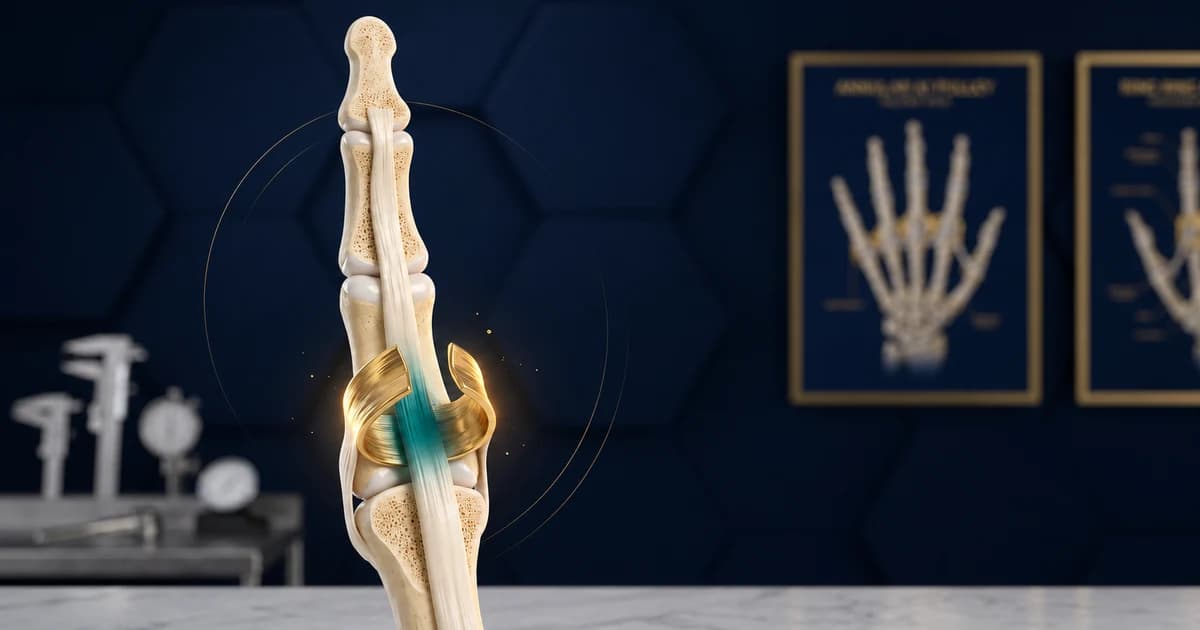
🏥 What happens on the day of surgery?
Trigger finger release is one of the shortest operations on the hand. Most patients walk home a few hours later and move the finger the same day. What follows is the plan for your first days.
💉 Anaesthesia
This operation is usually done under local anaesthetic: you are awake and only the palm and the affected finger are numb. Your surgeon may ask you to bend and straighten the finger during the operation itself, to confirm that the catching has been fully released.
🏠 How long you stay, and going home
- It is a day-case operation; you go home after a short period of observation.
- Do not drive yourself. Someone should take you home, because the operated hand is dressed and not yet fully yours to use.
- You go home with a dressing on the palm that leaves the finger free. Collect your prescription, your written care instructions and the date of your next visit.
🤲 What is normal and what is not
- Normal: as the anaesthetic wears off, the palm feels sore and burning. Mild swelling of the finger, morning stiffness and a tender scar line are expected in the first days.
- Normal: the catching itself usually stops immediately, but fully straightening the finger can take a few days. In one trial, patients in the open surgery group took a mean of 3 days to regain full flexion and 5.6 days to regain full extension.
- Normal: a small blood-tinged stain on the dressing that fades day by day.
- Not normal: pain that your prescribed painkiller does not touch at all, a finger that turns cold or dusky, new numbness you did not have before surgery, or swelling that increases daily instead of settling.
⚠️ Warning signs: when to call immediately
Call your surgeon or care centre the same day: redness or warmth spreading further from the wound line each day; purulent, thick or foul-smelling discharge, or a dressing that keeps soaking through; wound edges parting or stitches coming away early; pain that grows and throbs after the first days; fever, chills or feeling generally unwell; new numbness, tingling or weakness in the finger you did not have before surgery; being unable to bend or straighten the operated finger; the catching returning after it had once resolved completely; pain your prescribed medicine does not control.
Act as an emergency: the finger turning cold, pale or blue; very severe pain with a tight, tense, swollen hand that elevation does not relieve; burning, out-of-proportion pain with colour change, sweating and progressive stiffness of the hand. In Iran call the medical emergency line 115.
If you have questions about your wound, residual stiffness or your own return to work, or you notice any sign this page lists as «call the same day», call Dr. Jalil Emad’s office at +98 913 782 5207, or book an appointment online. In an emergency, do not wait for a response from the office.
To read more about this area of treatment, see the related service page: Peripheral Nerve
If you also have night-time numbness and tingling in the hand, see the carpal tunnel surgery guide as well; the two problems often occur together.
3Caring for your hand in the first days
The first days are repetitive rather than difficult: keep the hand up, move the finger, and keep the wound dry. Those three things do most of the work. If your discharge sheet or your surgeon's instructions give a different figure or condition, that takes priority and the rest of this page is general guidance.
Exceptions for this operation — this guide is written for an open release of one finger with nothing done at the same time. If your operation was done with a needle technique, several fingers were released together, or a carpal tunnel release was done at the same sitting, follow your own specific instructions.
🩹 Wound care and changing the dressing
Many people feel uneasy the first time they open the dressing. What you see is a short transverse line in the palm, just below the operated finger, with its edges closely apposed; it may look slightly swollen and pinker than the surrounding skin, and that is usual in the first days. The aim is simple: keep the wound dry and clean so it can close on its own. Infection after this operation is uncommon; in one trial of 46 patients, most of them diabetic, there were 2 wound infections and both settled with a week-long course of oral antibiotics.
More detailLess detail
- Before anything else, wash and dry your other hand thoroughly, then lay out clean supplies on a clean surface. Contamination almost always comes from a helper's hand or the work surface, not from the air.
- Lift the outer dressing away gently, across the palm. If a corner has stuck, do not pull it; wait a moment and open from the other side so the wound edge is not dragged.
- Only look at the wound. Do not press along the line with a finger, do not pick the scab, and do not twist the stitches.
- Clean it only in the way your discharge sheet describes. Do not put alcohol, povidone-iodine or an ointment of your own choosing on a fresh incision; these can slow healing.
- Apply a dry, clean dressing that covers the whole line with a narrow margin. It must not encircle the finger or stop it bending; the finger has to stay free.
- If the dressing becomes wet, dirty or loose, change it then and there rather than waiting for the next day. A damp dressing is a route in for bacteria.
- A small blood-tinged stain that fades daily is usual; purulent discharge, a bad smell or a dressing soaking again with fresh fluid is not, and should be reported the same day.
- Your stitches come out at your surgeon's planned interval, about 14 to 21 days after surgery, at your visit. Do not remove them yourself.
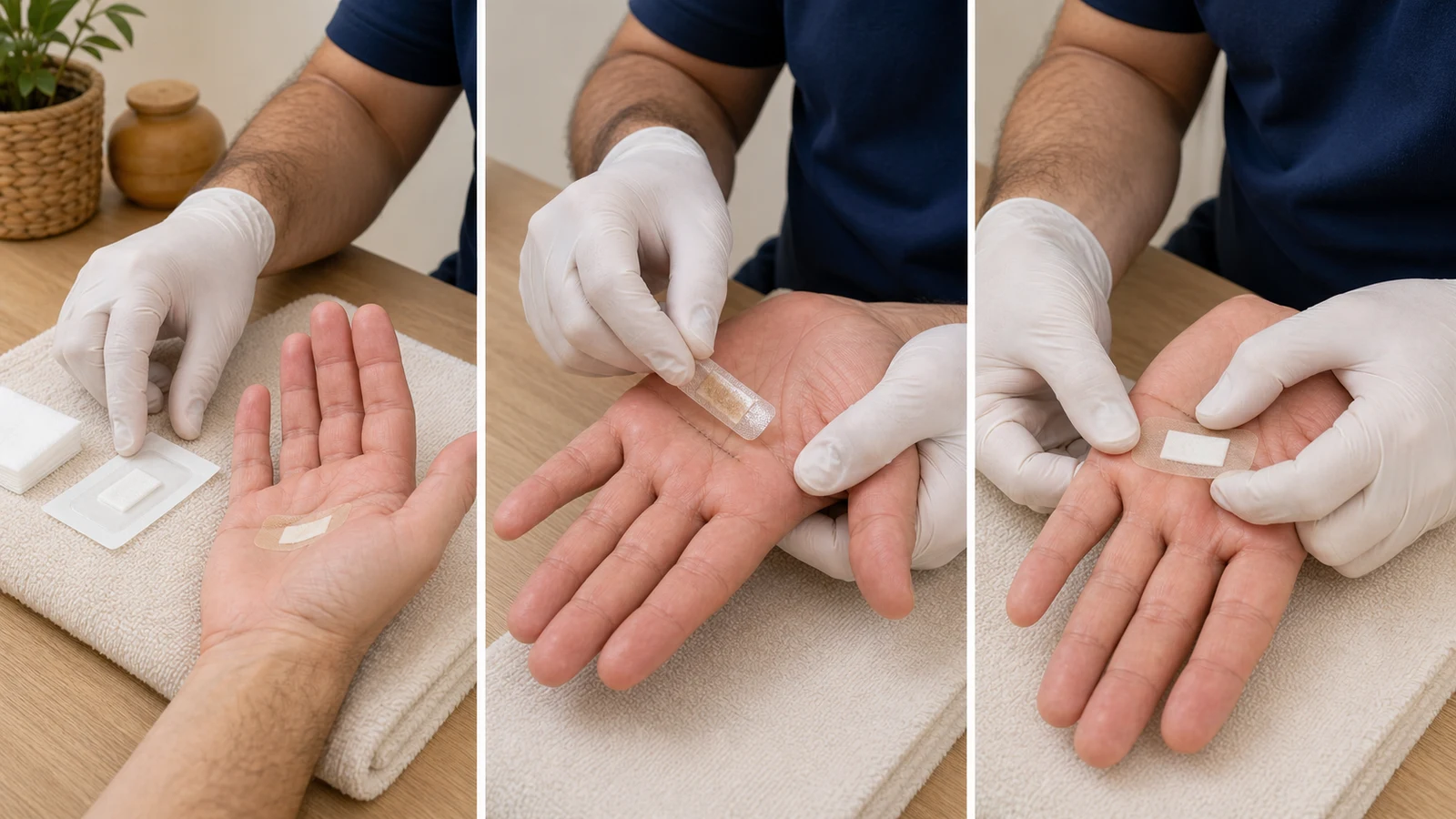
🦾 Moving the finger from day one
This is the most important thing you do at home. Your surgeon's plan is active movement from the first day, with no splint. The dressing sits on the palm, not around the finger, so the finger should bend and straighten from the first hours. Holding it still does not help the wound, contrary to what people expect; it only leaves more stiffness and more scarring inside the sheath — and stiffness, not the wound itself, is the commonest reason for dissatisfaction after this operation.
More detailLess detail
- Every hour or two while awake, make a full fist with the operated finger and open it fully. "Full" means the fingertip reaches the palm, and then the finger straightens completely.
- Move the other fingers and the thumb too, so the whole hand stays supple.
- Circle and raise the elbow and shoulder as well. An arm that hangs at your side for days develops a stiff shoulder.
- Light daily tasks such as holding a glass, doing up buttons and brushing your teeth are allowed and even useful.
- Do not force the finger straight with your other hand or lever on it; the movement must be active, using your own muscles.
- What is still too early: prolonged direct pressure on the palm, lifting heavy objects, gripping hard and twisting.
- If moving the finger becomes painful, or you cannot straighten it, stop and call.
🚿 Showering, waterproof cover and keeping the wound dry
Showering is not the same as soaking the hand. A short shower with the hand fully covered is fine, but submerging the hand is not allowed until the stitches are out and the wound line is dry.
More detailLess detail
- To shower, cover the hand with a waterproof cover or a plastic bag sealed above the wrist, and keep it out of the direct stream.
- If the cover leaks and the dressing gets wet, replace it with a dry, clean dressing straight after the shower.
- Washing dishes, baths, swimming pools, the sea and saunas wait until the wound has closed completely and your care team agrees.
- Once the wound has closed completely, gentle daily scar massage with a plain cream can help soften it.
💊 Your medicines and pain control
Take only the medicines written on your own prescription. Pain after this operation is usually mild and short; in one trial, patients in the open surgery group took painkillers for a mean of 2.9 days.
More detailLess detail
- In the first days take the painkiller on schedule, not only when the pain peaks. Pain is easier to control if you do not let it climb.
- Take a missed dose as soon as you remember, but if the next dose is close, do not take two together.
- Before adding any over-the-counter painkiller, compare its ingredients with your own medicine; many cold remedies contain the same active drug, and taking both means a double dose.
- If a sedating painkiller has been prescribed, do not drive or use machinery after taking it.
- Do not stop or add a medicine on your own, and do not change the dose.
- If you have diabetes, control your blood sugar more closely over these few weeks; high sugar both slows wound healing and raises the risk of infection.
🧊 Swelling, elevation and cold
Mild swelling of the palm and finger is usual in the first days and settles faster when the hand is kept up.
More detailLess detail
- Rest the hand on a pillow above the level of your heart, especially at night and in the first hours.
- Wrap a cold pack in a thin cloth and hold it against the wrist and palm for a few minutes at a time; never put cold directly on the skin or directly on the dressing.
- A hand that hangs down all day swells more; those simple, frequent finger movements are the best anti-swelling pump you have.
- If the fingers become swollen and numb, the dressing is probably too tight; loosen it, and call if that does not settle it.
🎯 Short rehabilitation after surgery
This operation needs no heavy exercise programme: active movement from day one, no splint. One exercise is worth the time.
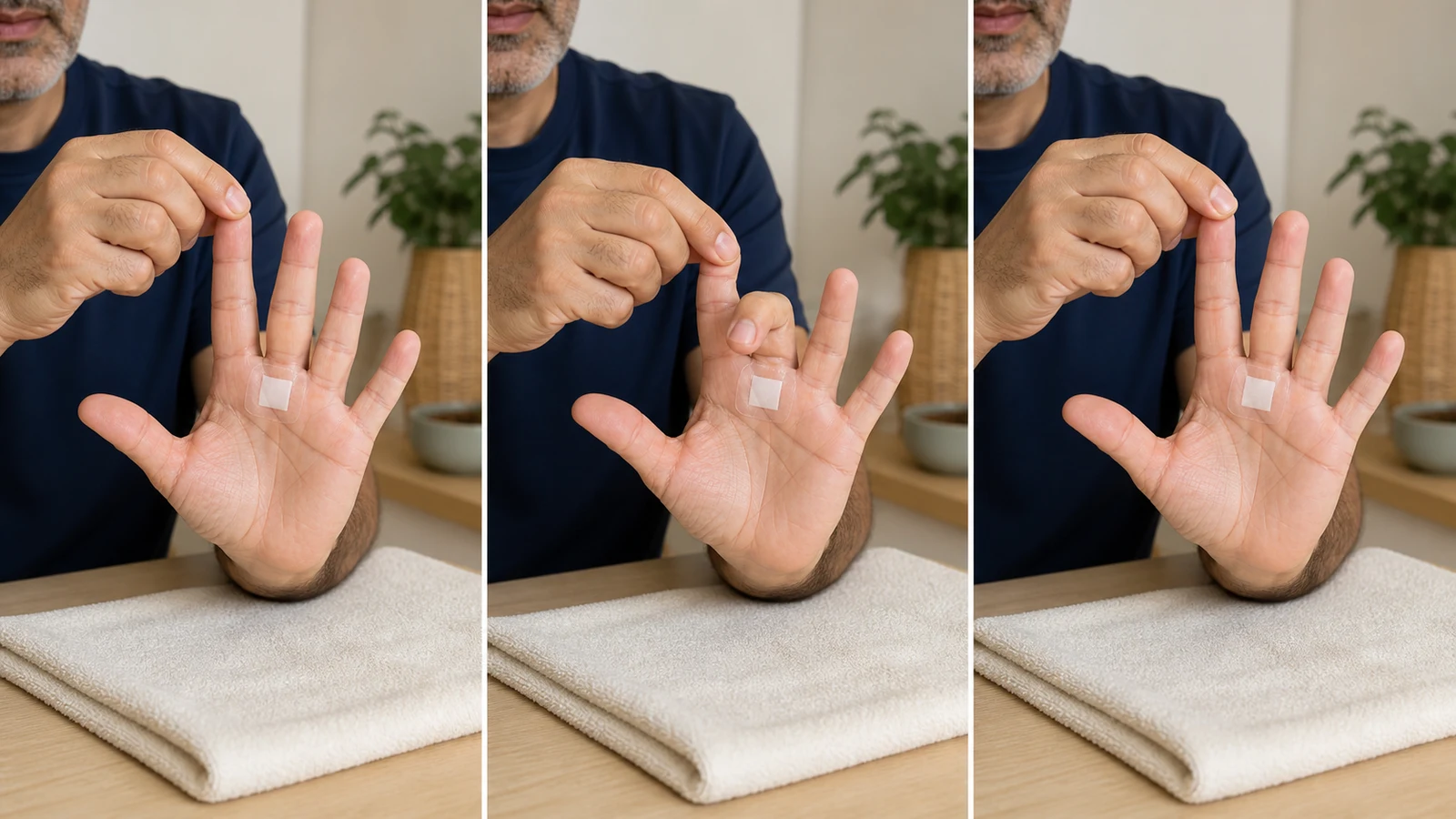
Blocking Exercise
Hold the base joint still and bend only the middle joint, so the tendon really glides. 5 to 10 times, a few times a day; stop if the pain is sharp.
More detailLess detail
Goal and why: blocking the base joint moves the glide to the middle joint.
Stage and starting criteria: from the first days, as soon as pain allows.
Equipment and safety: none; sitting with the forearm supported.
Starting position: palm up on the table, finger straight.
Step by step:
- Hold the first segment of the finger straight with your other hand.
- Bend only the middle joint and the fingertip.
- Hold a moment, then straighten slowly.
Range, side and limits: to a mild stretch, not pain.
Breathing: calm; do not hold your breath.
Rest: a few minutes between sets.
Stop immediately if: sharp pain or new numbness.
Common mistakes: holding the wrong spot; pushing with the good hand.
Progression criteria: the fingertip reaching the palm unaided.
🚗 Returning to work, driving and daily life
Returning to activity after this operation is gradual and depends more on your job than on the calendar. In one trial, patients in the open surgery group returned to their normal activities a mean of about 18 days after surgery. Hand function also improves in steps: the same patients' disability score fell from 43 before surgery to 8 at two weeks, 1 at four weeks and zero at twelve weeks.
- Driving: when the bulky dressing is off, you are not taking a sedating painkiller, and you can grip the wheel firmly and painlessly and keep control of the car in a sudden manoeuvre.
- Office and light work: usually possible sooner than manual work, provided you do not lean on the palm and the wound stays covered and dry.
- Manual work and hand tools: hard gripping, twisting and vibrating tools wait until the wound has closed completely and strength has returned.
- Sport: activities that do not load the hand come back sooner; swimming, weights and anything that presses on the palm wait for your care team's agreement.
- Prayer: if rising from prostration puts direct pressure on the operated palm, support yourself on a closed fist or the forearm during the first weeks instead.
- Sexual activity: there is no specific restriction; simply choose a position that keeps body weight off the operated palm and does not drag or wet the dressing.
❓ Frequently asked questions
1) Will the catching stop straight after surgery?
In most cases yes; the catching and sudden snapping that troubled you usually disappear immediately, because their mechanical cause has been removed. But stiffness, swelling and difficulty straightening the finger fully can last a few days, and that is different from the problem coming back.
2) Why can I still not straighten my finger completely?
In the first days this is usual. In one trial, patients in the open surgery group took a mean of 5.6 days to regain full extension and 3 days to regain full flexion. If your finger had been held bent for years, the process is slower.
3) Do I need a splint?
Not in your surgeon's plan; active movement from the first day, without a splint, is what has been asked for. If a splint is prescribed for you for a particular reason, that specific instruction takes priority.
4) When do the stitches come out?
At your surgeon's planned interval, about 14 to 21 days after surgery, at your visit. Do not remove them yourself; removing them early or at home raises the risk of the wound opening and of infection.
5) When can I put my hand in water?
Do not submerge the hand until the stitches are out and the wound line is completely dry and closed. A short shower with a waterproof cover is a separate matter and is fine.
6) Do I need physiotherapy or hand therapy?
Not routinely in your surgeon's plan. The same active movement at home is enough for most patients. A referral for a finger that is still stiff or will not straighten after some weeks is a separate, individual decision.
7) When can I drive?
When the bulky dressing is off, you are not taking a sedating painkiller, and you can grip the wheel firmly and painlessly and keep control of the car in a sudden manoeuvre. This ability returns at different times for different people.
8) When can I go back to work?
In one trial, patients in the open surgery group returned to normal activities a mean of about 18 days after surgery, but the spread was wide. Your type of job, your dominant hand and how much your work presses on the palm all decide this.
9) My palm hurts when I press on it — has something gone wrong?
Tenderness of the scar line when you lean or press on it is the commonest complaint after this operation and usually settles over weeks. Until then, lean on a closed fist or your forearm rather than the palm. Pain that worsens daily, or comes with redness and fever, is different and needs review.
10) I have heard there is a needle technique without stitches; why open surgery?
Both techniques are acceptable. A meta-analysis of 8 trials in 548 patients found no significant difference between them in the need for revision, complications or postoperative pain. The differences lie more in how quickly people return to activity and in the appearance of the scar, and the choice depends on your finger and your surgeon's judgement.
11) How much of a scar will there be?
The wound line is raised and pink at first and fades and softens over months. To be honest about it: in one trial the cosmetic result was rated "fair or poor" in about half of the open surgery group. Once the wound has closed completely, gentle daily massage with a plain cream helps soften it.
12) I have heard the tendon "bowstrings" after this operation — is that dangerous?
After the pulley is opened, the tendon sits slightly further from the bone, which is called bowstringing. In one trial this distance had increased at twelve weeks but had decreased again by twenty-four weeks, and it showed no relationship with hand strength or function.
13) Can trigger finger come back?
Recurrence after an open release is uncommon; the available meta-analysis found no difference between techniques in the need for a revision procedure. If the catching returns after a period in which it had fully resolved, that needs examination and should not be interpreted by guesswork.
14) My other finger catches too — should they be done together?
That decision depends on how severe your symptoms are, on your job and on your circumstances at home. This article is written for the release of one finger; if several fingers at once are being considered for you, the care plan and the help you will need at home should be discussed separately with your surgeon.
15) Does diabetes affect the result of this operation?
Yes. In people with diabetes the wound heals more slowly and the finger is more prone to remaining stiff; in advanced cases something more than a simple pulley release is sometimes needed. Controlling your blood sugar over these few weeks directly benefits this wound.
16) Does smoking affect wound healing?
Yes. Tobacco slows wound healing and raises the risk of infection. Cutting down or stopping over this short period directly benefits this wound.
✅ Summary
Trigger finger release is a small operation with a usually rapid result. Three things do most of the work: keep the wound dry and covered, bend and straighten the finger fully from the first day, and keep the hand up. The catching usually stops immediately; what takes a few days is full straightening and the settling of swelling.
If you have questions about your wound, residual stiffness or your own return to work, or you notice any sign this page lists as «call the same day», call Dr. Jalil Emad’s office at +98 913 782 5207, or book an appointment online. In an emergency, do not wait for a response from the office.
To read more about this area of treatment, see the related service page: Peripheral Nerve
If you also have night-time numbness and tingling in the hand, see the carpal tunnel surgery guide as well; the two problems often occur together.
Related guides: Service page: Peripheral Nerve · Also related: Carpal Tunnel Release Surgery: Wound Care and Finger Movement
📚 Scientific sources
View the scientific sources
- Casey JC, Daher M, Dworkin M, Cusano J, Garavito J, Gil JA. Open Versus Percutaneous Fixation of Trigger Finger: Meta-Analysis of Clinical Outcomes. J Hand Surg Am. 2024;49(6):570-575. doi:10.1016/j.jhsa.2024.03.010
- Nikolaou VS, Malahias MA, Kaseta MK, Sourlas I, Babis GC. Comparative clinical study of ultrasound-guided A1 pulley release vs open surgical intervention in the treatment of trigger finger. World J Orthop. 2017;8(2):163-169. doi:10.5312/wjo.v8.i2.163
- Abdullah S, Syed Ahmad Kabeer SJ, Hua LC, Sapuan J, Gill PS, Zi Fan ES. Impact of Flexor Tendon Traction Tenolysis on Clinical Outcomes in Open A1 Pulley Release for Trigger Finger. J Hand Surg Glob Online. 2024;7(1):56-60. doi:10.1016/j.jhsg.2024.09.010
- Park KH, Shin WJ, Kim SJ, Kim JP. Does Bowstringing Affect Hand Function in Patients Treated With A1 Pulley Release for Trigger Fingers? Comparison Between Percutaneous Versus Open Technique. Ann Plast Surg. 2018;81(5):537-543. doi:10.1097/SAP.0000000000001561
- Crouch G, Xu J, Graham DJ, Sivakumar BS. Flexor Digitorum Superficialis Excision for Trigger Finger — A Systematic Literature Review. J Hand Surg Asian Pac Vol. 2023;28(3):388-397. doi:10.1142/S242483552350042X
- Lan X, Xiao L, Chen B, Xiong Y, Zou L, Luo J. A Comparison of the Outcomes of Open Trigger Release versus Ultrasound-Guided Modified Small Needle-Knife Percutaneous Release for Treatment of Trigger Digits. J Hand Surg Asian Pac Vol. 2023;28(1):69-74. doi:10.1142/S2424835523500017
- Rojo-Manaute JM, Rodríguez-Maruri G, Capa-Grasa A, Chana-Rodríguez F, Del Valle Soto M, Vaquero Martín J. Sonographically guided intrasheath percutaneous release of the first annular pulley for trigger digits, part 1. J Ultrasound Med. 2012;31(3):417-424. doi:10.7863/jum.2012.31.3.417
- Wong AL, Wong MJ, Parker R, Wheelock ME. Presentation and aetiology of paediatric trigger finger: a systematic review. J Hand Surg Eur Vol. 2022;47(2):192-196. doi:10.1177/17531934211035642
This content is for general education only and does not replace an examination, the advice of your treating doctor, your discharge sheet or your surgeon's specific protocol. Timing, range of movement and exercise dose differ with the type of operation, any procedures done at the same time, and each person's circumstances. Do not change your medicines, your dressing or your exercise programme without talking to your care team.

Dr. Jalil Emad
Orthopedic specialist and surgeon, board-certified in bone and joint surgery; years of experience in knee and hip replacement, sports injuries and arthroscopy in Isfahan.
Related articles
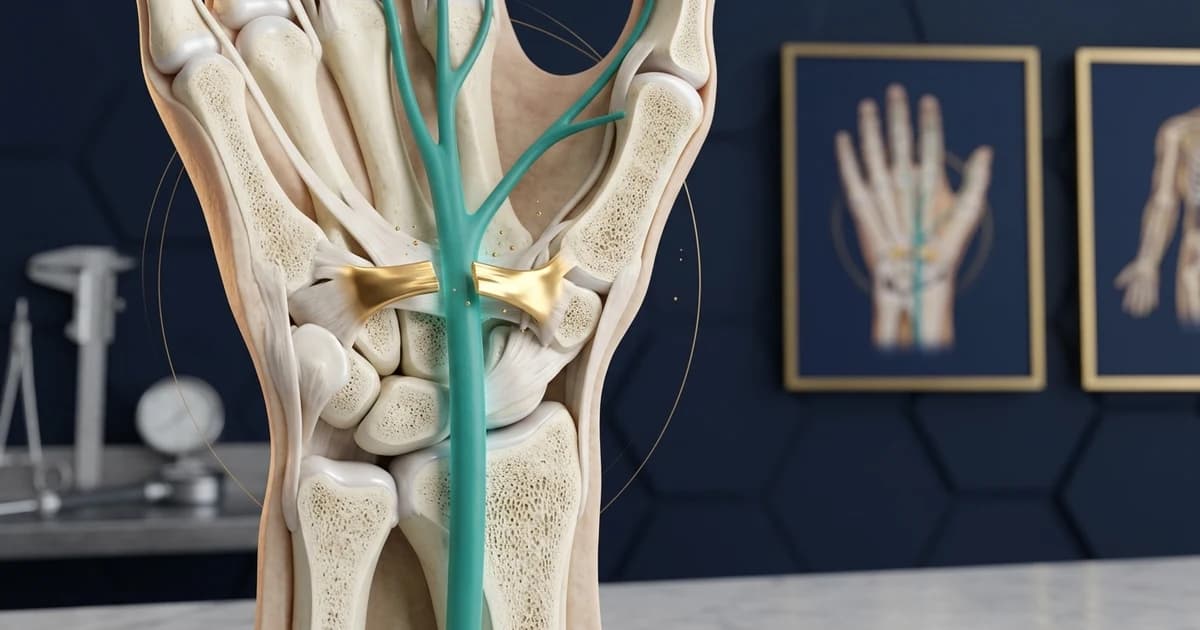
Carpal Tunnel Release Surgery: Wound Care and Finger Movement
A short, evidence-based guide to the first days after carpal tunnel release—from the dressing, showering and warning signs to finger movement, returning to work and common questions.
Total Knee Replacement Surgery: Postoperative Care and Rehabilitation
Read knee replacement recovery step by step, from wound care and medicines to exercise. Progress depends on pain, swelling and movement.
ACL reconstruction
Care and rehabilitation after ACL reconstruction; if your meniscus was repaired in the same operation, pick your version at the top of the article — the type of repair sets the weight-bearing and knee-bend limits of the first weeks.