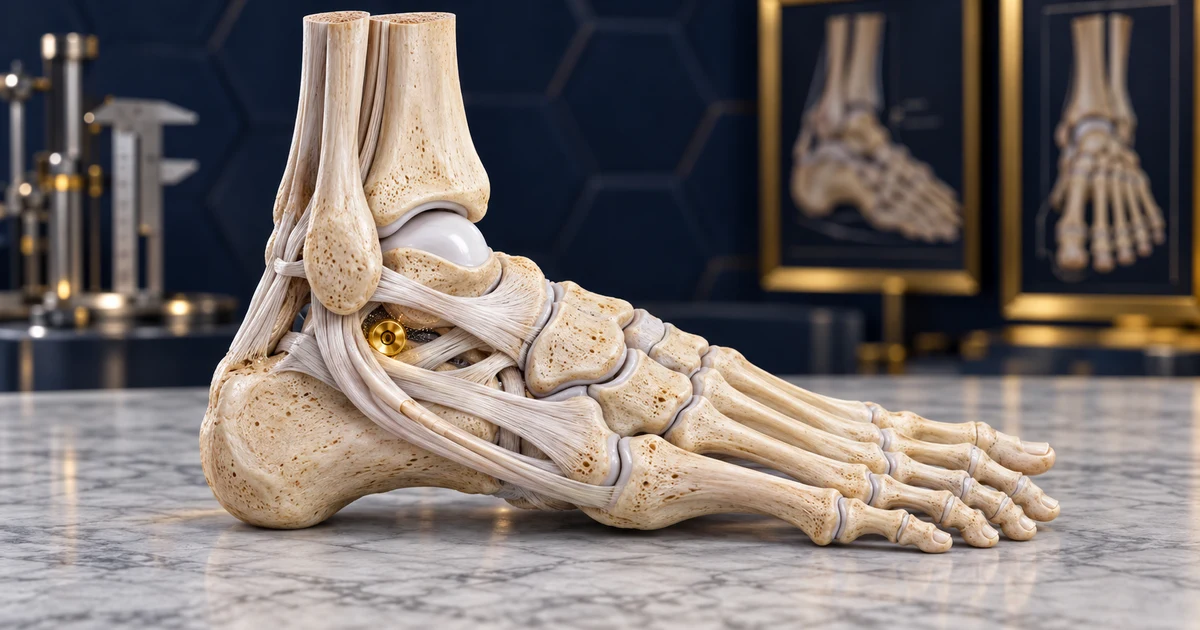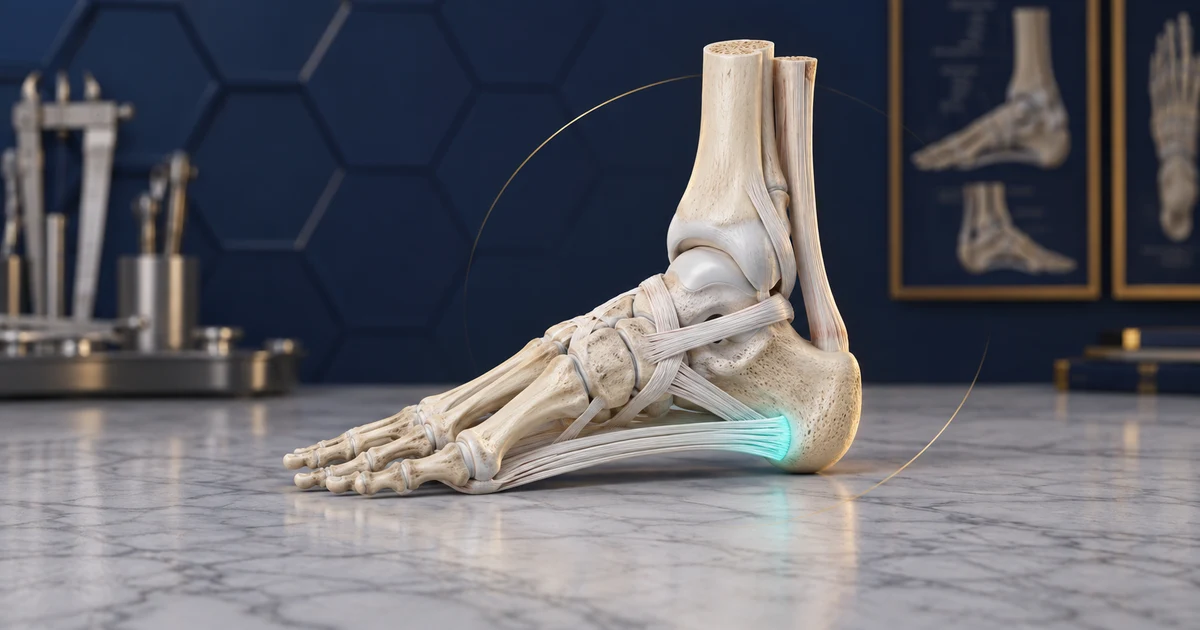
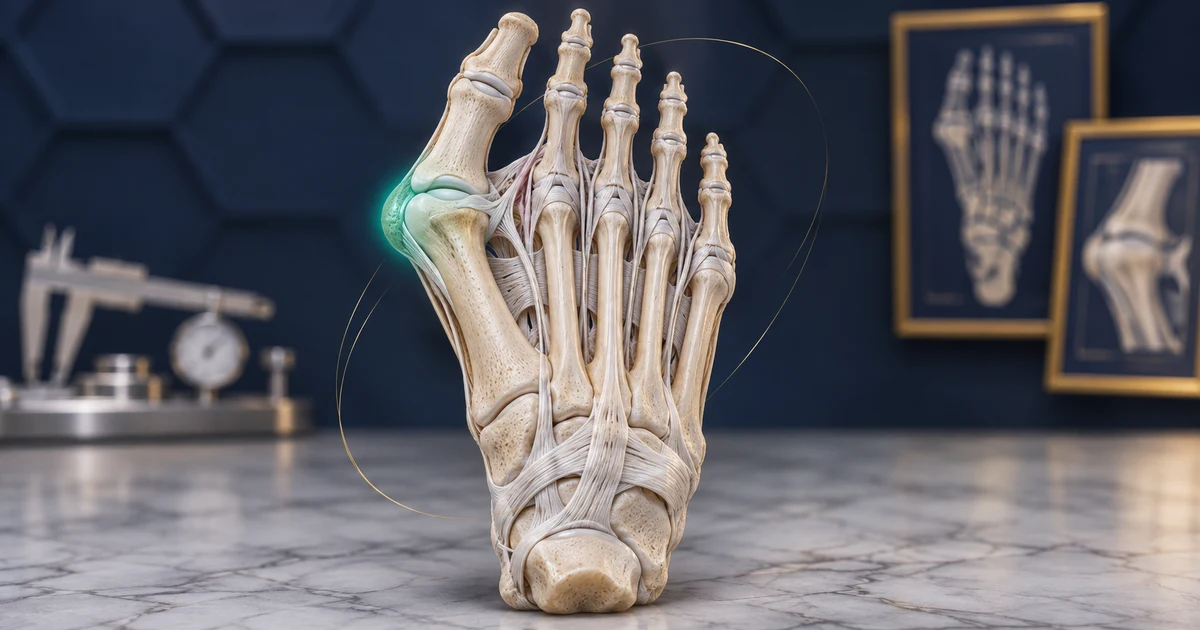
When a bump develops beside your big toe and rubs against your shoe, it is natural to consider treatment. With hallux valgus, or a bunion deformity, the decision about surgery depends on more than how far the toe has drifted: pain, walking and the response to simple treatments also matter. This guide explains the role of nonsurgical care, the aim of surgery and how to prepare for recovery before you decide.
What is hallux valgus, and when is surgery an option?
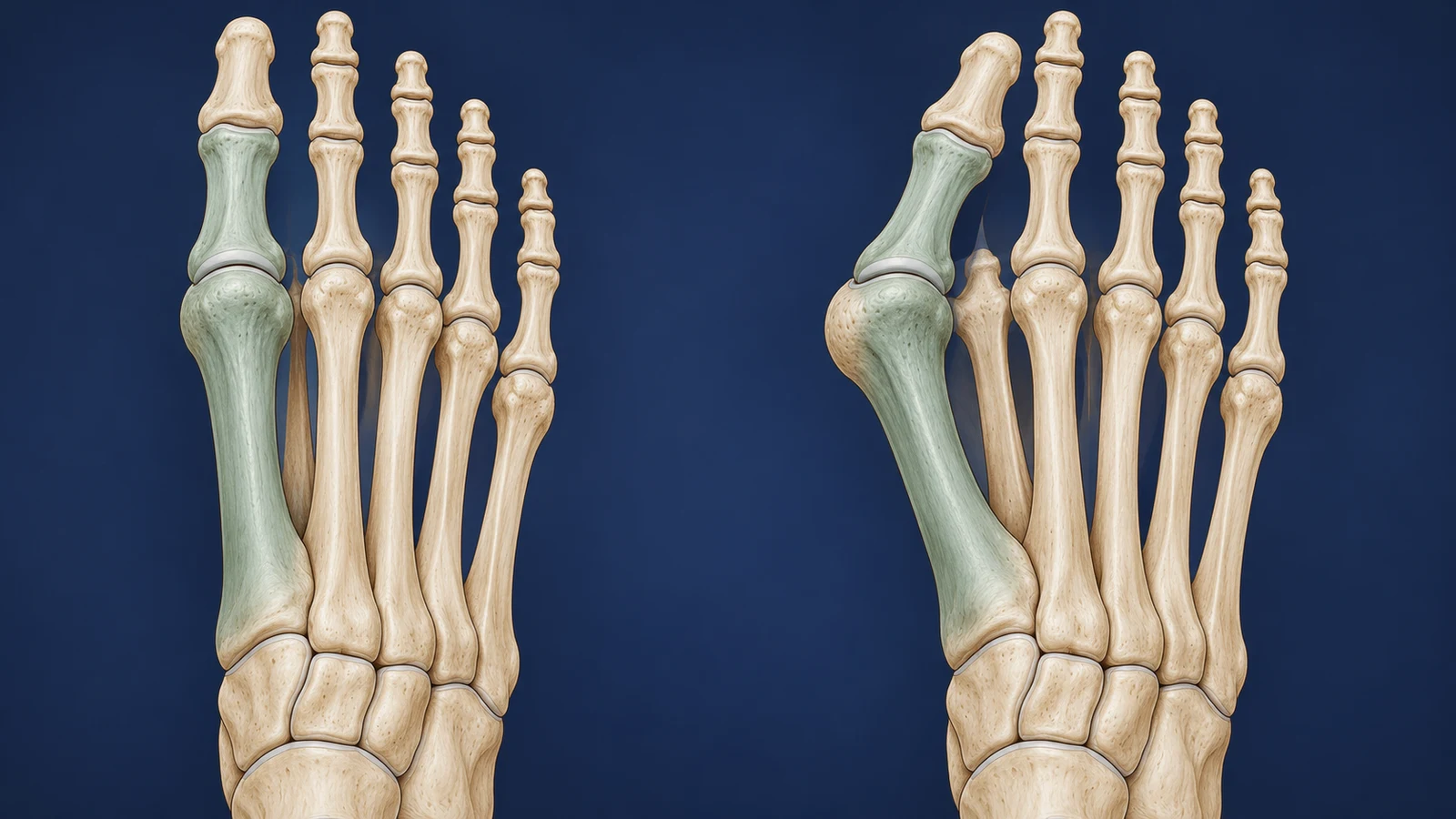
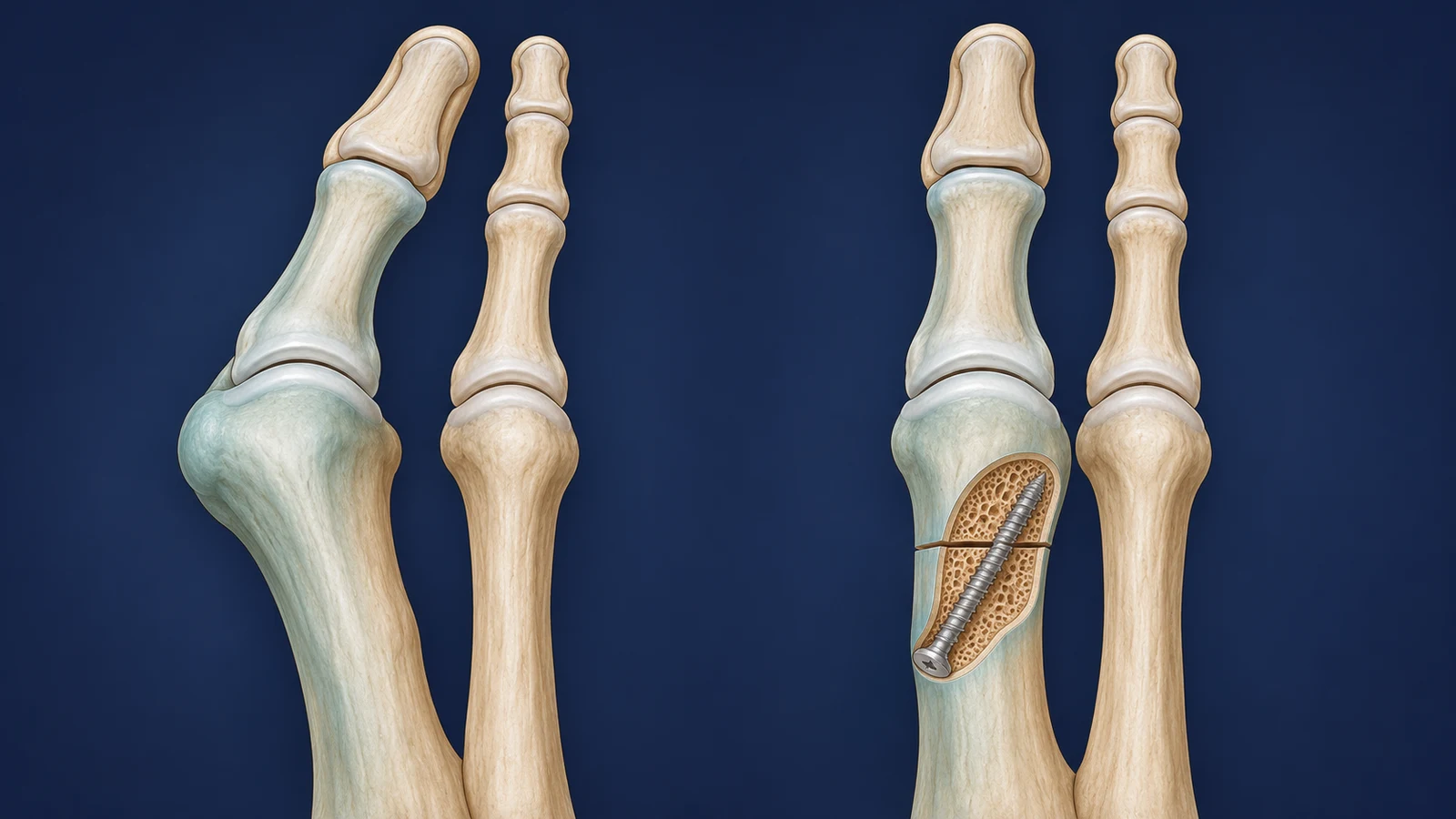
In hallux valgus, the big toe leans towards the smaller toes and the long bone behind it moves out of its normal alignment. This makes the joint at the base of the big toe prominent; the bump is usually more than an extra piece of bone that can simply be shaved away to solve the whole problem. Shoe pressure over this area can cause pain and inflammation, and pressure may also be transferred to the neighbouring toes or the ball of the foot.
The examination includes the site of pain, joint movement, the skin and calluses, sensation and blood supply to the foot. Planning surgery usually requires X-rays taken while you stand and bear weight, so the alignment of the bones can be assessed. An X-ray helps with procedure selection, but does not by itself show how much pain you have or whether surgery is right for you. If the main problem is stiffness and pain within the big toe joint, its assessment and treatment pathway differ from those for hallux valgus.
Treatment usually starts by reducing pressure: shoes with enough space for the toes, a low heel and a soft upper, with protective pads or suitable insoles if needed. These measures can reduce pain, but should not be expected to permanently correct bone alignment. If you walk comfortably in suitable shoes, the appearance of the bump alone is not a sufficient reason for surgery.
When pain and difficulty wearing shoes or walking continue to limit daily life despite appropriate treatment, surgery is one treatment option. The aim is to reduce pain and improve foot function; a perfectly straight toe, lifelong freedom from pain or the ability to wear any type of shoe cannot be guaranteed. Before deciding, identify which daily activity you want to make easier and what help you have for the temporary restrictions after surgery.
What happens if you do not have surgery for now?
The deformity may increase over time, but its rate of change and the amount of pain differ between people. Some people have manageable symptoms for a long time with suitable footwear. In others, the bump rubs more against shoes, calluses develop or the big toe presses on the neighbouring toe. These outcomes are not inevitable, and the appearance of the foot cannot predict when they might occur.
If pain is manageable and the skin remains healthy, surgery is usually elective, and its timing can be considered alongside follow-up and nonsurgical care. Waiting should not mean accepting worsening pain or ignoring a wound. Arrange another assessment if suitable shoes no longer help, walking or work becomes limited, or sores develop where the toes press together.
With diabetes, reduced sensation or poor circulation, skin damage needs particular attention. Do not assume that a new wound, spreading redness or discharge is simply due to the bunion; contact the care team promptly for assessment. Follow-up aims to identify treatable problems early; a painless foot does not need surgery simply to prevent every possible future change.
Preparing for surgery: your health and home arrangements
Start by reviewing your medical conditions, allergies and medicines. Bring a list of prescription medicines, non-prescription medicines and supplements, and report diabetes, heart or lung disease, circulation problems and any history of blood clots. Tests and consultations are selected according to your condition and the anaesthesia team's assessment; everyone does not need the same list. If you smoke or use nicotine products, ask the care team for help stopping, because nicotine makes wound and bone healing more difficult.
Before surgery day, practise using crutches and moving without pressure through the forefoot with a therapist. Your arms, balance and opposite leg also matter. If you have stairs at home or live alone, plan transport, shopping, meals and help with essential tasks in advance. Clear objects from walkways, remove loose rugs and prepare somewhere to sit and elevate your foot.
Keep your foot clean and report any blister, wound or skin infection before surgery. This guide does not prescribe a general exercise programme to straighten the toe. A clinical trial is a study that examines the effects of a treatment in patients. There is insufficient evidence from these studies that preoperative exercise improves the outcome of this operation. Learning to use a walking aid and preparing your home are different from prescribing demanding toe exercises. If a therapist has given you a programme for your particular condition, follow that programme.
The day before surgery and the day of your operation
Obtain your eating and drinking instructions from the anaesthesia team and follow them exactly. Do not choose fasting times or decide whether you may drink water based on another person's experience or a general online instruction. Arrange instructions in advance for continuing or changing blood thinners and diabetes medicines; do not stop, reduce or replace medicines yourself. If any instructions are unclear, call before admission day so the uncertainty is resolved.
Follow your centre's instructions for bathing and skin preparation. Report a fever, new illness or injury to the skin of your foot before attending; the care team will decide whether surgery can go ahead or needs rescheduling. Prepare your documents, X-rays, medicine list and walking aid. Wear clothes that will be easy to put on with a dressing and splint, and arrange someone to accompany you home; do not drive yourself.
On admission, your identity and the foot being operated on are checked. The surgeon discusses the aim of correction, restrictions and risks with you so that you can make an informed decision about consenting to surgery. The type of anaesthesia is selected after assessment by the anaesthesia team; your medical condition and the surgical plan influence that choice. During this discussion, mention any previous reaction to anaesthesia or a medicine, or anything that concerns you.
After surgery, your alertness, pain and general condition are first assessed in the post-anaesthetic recovery area. Going home the same day may be possible if the medical and safety requirements for discharge are met, but this is not a promise. Before leaving, you and your companion should understand crutch use, how your foot may contact the ground, medicines, follow-up arrangements and how to contact the care team.
How is hallux valgus corrected surgically?
The main scenario in this guide is open correction of the deformity while preserving the big toe joint. Through a skin incision, the surgeon reaches the bone, makes a controlled cut and moves the bone fragments into better alignment. This is called an osteotomy. A screw or another fixation device holds the bone in its corrected position while it heals; the tissues around the joint are also balanced if needed.
The location and shape of the bone cut are not the same for everyone. The severity of the deformity, joint condition and stability elsewhere in the foot influence procedure selection. Sometimes another procedure, such as fusion of the joint at the base of the long bone behind the big toe, is needed for suitable correction; this is different from fusing the big toe joint itself. Ask the surgeon for the name of your procedure so you know exactly which bone or joint is being corrected and what restrictions follow.
Shaving off the bump alone usually does not correct bone alignment. A more complicated procedure name does not necessarily mean a better result either; the procedure should fit your foot problem, and no single technique has been shown to be superior for everyone. Operating time also depends on the amount of correction and any additional procedures. Ask about your own plan so you know what to expect.
Before giving final consent, discuss infection, nerve injury and altered sensation, joint stiffness, persistent pain, failure of bone healing and recurrence of the deformity. These complications do not affect everyone, but may require further treatment or follow-up. Surgery can reduce pain and improve foot function; its outcome should be weighed against the risks and restrictions during healing. The aim of this discussion is an informed choice based on your life and health.
Recovery at a glance
Under Dr Emad's protocol for this treatment pathway, the foot remains in a splint for 45 days and walking is only with crutches. During this period, keep the foot clear of the ground or allow heel contact only at most; the forefoot takes no weight. Splint removal and increased weight-bearing require examination and the surgeon's permission; reaching the end of this period does not by itself allow normal walking.
Keep the dressing and corrective toe support as instructed and do not reposition them yourself. Swelling can make footwear and prolonged standing difficult for a while. Follow your discharge instructions for pain control, wound care and follow-up. The start of toe movement depends on the procedure; if a joint has been fused, do not exercise that joint in an attempt to bend it.
For details of dressings, warning signs and permitted movements, read the guide to care and rehabilitation after big toe surgery. That guide covers both hallux valgus and a stiff big toe; follow only the instructions relevant to your own operation.
Returning to everyday life: answers to 20 questions
1) When can I walk on the operated foot?
Under this guide's protocol, walking for the first 45 days is only with crutches and without loading the forefoot; at most, only the heel may contact the ground. Normal walking begins after healing has been assessed and the surgeon gives permission. Less pain alone does not mean that the bone is ready to bear weight.
2) When can I stop using crutches?
While weight-bearing is restricted, crutches are needed to maintain that restriction. Once the surgeon allows increased loading, the therapist checks whether you can step without prohibited pressure, limping or loss of balance. Being able to take a few steps does not by itself allow you to stop using crutches.
3) What footwear is suitable when I return to ordinary shoes?
During the splint period, do not start wearing ordinary shoes or walking without protection on your own. After the surgeon gives permission, choose a shoe with a wide, deep toe box that does not press on the wound or prominent area. If swelling causes pressure or pain, that shoe is not yet suitable.
4) When can I drive again?
Do not drive with a splint or if you cannot fully control the pedals. Consider returning only after foot restrictions have been lifted, you are not taking sedating medicines, and you can perform an emergency stop without pain or delay. The operated side and type of vehicle also matter; check the surgeon's permission and your insurer's requirements before starting.
5) When can I return to seated work?
Seated work can be planned when you can travel safely and elevate your foot and take breaks while working. Pain, swelling and medicine effects should not compromise concentration or safety. Discuss working from home and shorter working hours with your employer before surgery.
6) What are the criteria for standing work or heavy work?
While forefoot loading is prohibited, work that requires standing or carrying loads is unsuitable. Returning depends on bone healing, tolerance of shoes and standing, balance and permission to increase activity. Describe your actual job tasks so that a suitable gradual return can be planned.
7) How can I manage stairs at home?
Before discharge, learn to manage stairs with your therapist and your own walking aid; you must not push through the operated forefoot to go up or down. If you cannot maintain this restriction or your balance, arrange a resting place on an accessible floor and get help. Written instructions cannot replace safe supervised practice.
8) What position is suitable for sleep and rest?
Position the foot so that the splint is not under pressure and the big toe is not pressed against the bed or the other foot. Use pillows under the lower leg to keep the foot elevated and help reduce swelling. Do not remove the splint yourself to sleep more comfortably; contact the care team if it creates painful pressure.
9) When can I shower?
While the wound and dressing must remain dry, an ordinary shower without suitable protection is inappropriate. Learn a safe washing method and how to protect the splint from the care team, and arrange the balance support and help you need for bathing. If the dressing gets wet, contact the team for assessment and appropriate replacement; do not leave it wet.
10) Can I remove the stitches and dressing myself?
No; stitch removal and changes to the corrective dressing depend on the wound and the follow-up plan. The dressing may help maintain toe alignment, so a clean-looking wound is not permission to remove it. If the dressing becomes loose, wet or soiled, contact the care team for advice.
11) When should I plan a long journey by road?
If you need close follow-up for the wound, medicines or splint, coordinate travel with that schedule. Before booking, consider prolonged sitting, keeping the foot down and difficulty accessing medical care. Obtain an individual plan for breaks, foot positioning and clot risk; do not add a blood thinner yourself.
12) What precautions do I need for flying?
Do not confirm a flight before discussing it with the surgeon and checking the airline's restrictions concerning a splint. The ability to elevate your foot, airport assistance and clot risk depend on your condition and the journey length. A painless foot alone does not mean you may fly, and preventive medicine is not prescribed identically for everyone.
13) When can I return to the swimming pool?
Do not enter a pool until the wound is fully healed and the care team gives permission; a waterproof dressing does not replace that permission. Getting into and out of the pool must also respect the splint and weight-bearing restrictions. Once permitted, choose water activities that suit the operation and your ability to move safely.
14) When can I start walking for exercise?
Essential movement with crutches is different from walking for exercise. Exercise walking starts after weight-bearing is permitted and when you can walk in suitable shoes without limping or increasing pain or swelling. Increase time and distance gradually according to your foot's response and the therapist's plan.
15) When am I ready for running and high-impact sport?
Running, jumping and changing direction require greater forefoot loading and are not allowed during the protection period. Return follows confirmation of healing and assessment of strength, balance and activity tolerance. Time alone or a better-looking toe is not enough to make this decision.
16) What restrictions should I observe for prayer?
Choose a position that respects the loading restriction and does not bend or press the big toe beneath your body. During the splint period, if standing or sitting on the floor would break that restriction, use a chair and get help with transfers. Ask a trusted religious authority about the religious ruling for an alternative position.
17) When can sexual activity resume?
There is no single time for everyone; alertness, comfort and maintaining foot restrictions are practical criteria. Choose a position that does not put pressure on the splint or toe and does not require you to push through the forefoot when moving. Stop if pain occurs, and ask if you are unsure about a restriction specific to your operation.
18) Will I definitely need physiotherapy and toe-movement exercises?
Whether and when physiotherapy is needed depends on the procedure and healing; crutch training may be needed before surgery. Start toe movement only once permitted and using the method you have been taught. If a joint has been fused, trying to bend that same joint is inappropriate.
19) How should pain and swelling after surgery be judged?
Some pain and swelling are expected during healing, but their course matters. Contact the care team for increasing pain, a dressing problem, fever or new redness; do not mask pain by increasing medicine yourself. New calf pain or swelling needs urgent assessment; seek emergency help immediately for sudden breathlessness or chest pain.
20) Can the deformity come back?
The deformity can recur, and surgery does not guarantee that the toe will remain straight forever. Suitable procedure selection, follow-up and protecting the correction matter. Continue to favour roomy shoes after recovery, and seek reassessment if pain or deformity increases again.
Your next step in choosing treatment
Start with your pain and everyday limitations when deciding about hallux valgus surgery. Suitable footwear and nonsurgical treatment can reduce symptoms; if they are insufficient, surgery can be considered according to the examination and X-rays. Before setting a date, clarify the medicine and anaesthesia plan, help at home and how to use crutches. At your consultation, explain which activity matters most to you so that your expectations and treatment goals agree.
For assessment of bunion pain and help choosing treatment, call Dr Jalil Emad’s clinic on 0913 782 5207, or book an appointment online.
Read more about assessing bone deformities: Limb deformity correction.
This article is educational; your treatment decisions and individual restrictions are determined after examination and according to the operation performed.
Scientific references
Sources and guidelines used in this guide
- Dias CGP, et al. Surgical interventions for treating hallux valgus and bunions. Cochrane Database Syst Rev. 2024;CD013726. doi:10.1002/14651858.CD013726.pub2. PMID:39051477. https://pubmed.ncbi.nlm.nih.gov/39051477/
- Gumuskaya O, et al. Preoperative and Postoperative Physical and Mechanical Rehabilitation Interventions in Hallux Valgus: A Systematic Review. J Foot Ankle Res.2025;18:e70083. doi:10.1002/jfa2.70083. PMID:40936159. https://pubmed.ncbi.nlm.nih.gov/40936159/
- DGOU/D.A.F. Hallux valgus S2e guideline. Version5.2, full German guideline file2026-01. https://register.awmf.org/assets/guidelines/187-051l_S2e_Hallux-Valgus_2026-01.pdf
- DGOU/D.A.F. Hallux valgus S2e guideline. English recommendations version5.1(2024), file2025-06. https://register.awmf.org/assets/guidelines/187_Orthop%C3%A4die_und_Unfallchirurgie/187-051eng_S2e_Hallux-Valgus_2025-06.pdf
- AAOS OrthoInfo. Bunions. https://www.orthoinfo.org/bodypart/foot-ankle/bunions/
- AAOS OrthoInfo. Bunion Surgery. https://www.orthoinfo.org/bodypart/foot-ankle/bunion-surgery/
- NHS. Bunions. https://www.nhs.uk/conditions/bunions/
- NHS. Having an operation: before surgery. https://www.nhs.uk/tests-and-treatments/having-surgery/preparation/
- Royal National Orthopaedic Hospital. Bunion and lesser toe deformities. https://www.rnoh.nhs.uk/patients-and-visitors/patient-information-guides/bunion-hallux-valgus-and-lesser-toe-deformities
- AOFAS FootCareMD. How to prepare for foot or ankle surgery, part1. https://www.footcaremd.org/resources/how-to-help/how-to-prepare-for-foot-or-ankle-surgery-part-1
- Royal Devon University Healthcare NHS Foundation Trust. Preparing for your foot and ankle operation at SWAOC. March2026. https://www.royaldevon.nhs.uk/media/xd1hfwag/preparing-for-your-foot-and-ankle-operation-at-swaoc-rd-e-23-010-003.pdf
- South Tees Hospitals NHS Foundation Trust. Preparing for foot and ankle surgery. https://www.southtees.nhs.uk/resources/preparing-for-foot-and-ankle-surgery/
- Dmour A, et al. Predictors and Prevention of Hallux Valgus Recurrence After Primary Surgical Correction: A Structured Narrative Review. Med Sci(Basel).2026;14:537. doi:10.3390/medsci14050537. PMID:42783410. https://pubmed.ncbi.nlm.nih.gov/42783410/
- AOFAS FootCareMD. How to prepare for foot or ankle surgery, part3: after surgery. https://www.footcaremd.org/resources/how-to-help/how-to-prepare-for-foot-or-ankle-surgery-part-3
- Royal Orthopaedic Hospital. Travel, surgery and deep vein thrombosis. https://roh.nhs.uk/services-information/other-info/before-surgery/travel-surgery-and-dvt
- University Hospitals Dorset NHS Foundation Trust. Returning to activities. https://www.uhd.nhs.uk/services/orthopaedics/bournemouth/returning-to-activities